Selected Projects
2022: Daniel Effah // Between This Space and Me: Tracing the Shadow as an Episteme (Ozayr Saloojee + Menna Agha, Advisors).
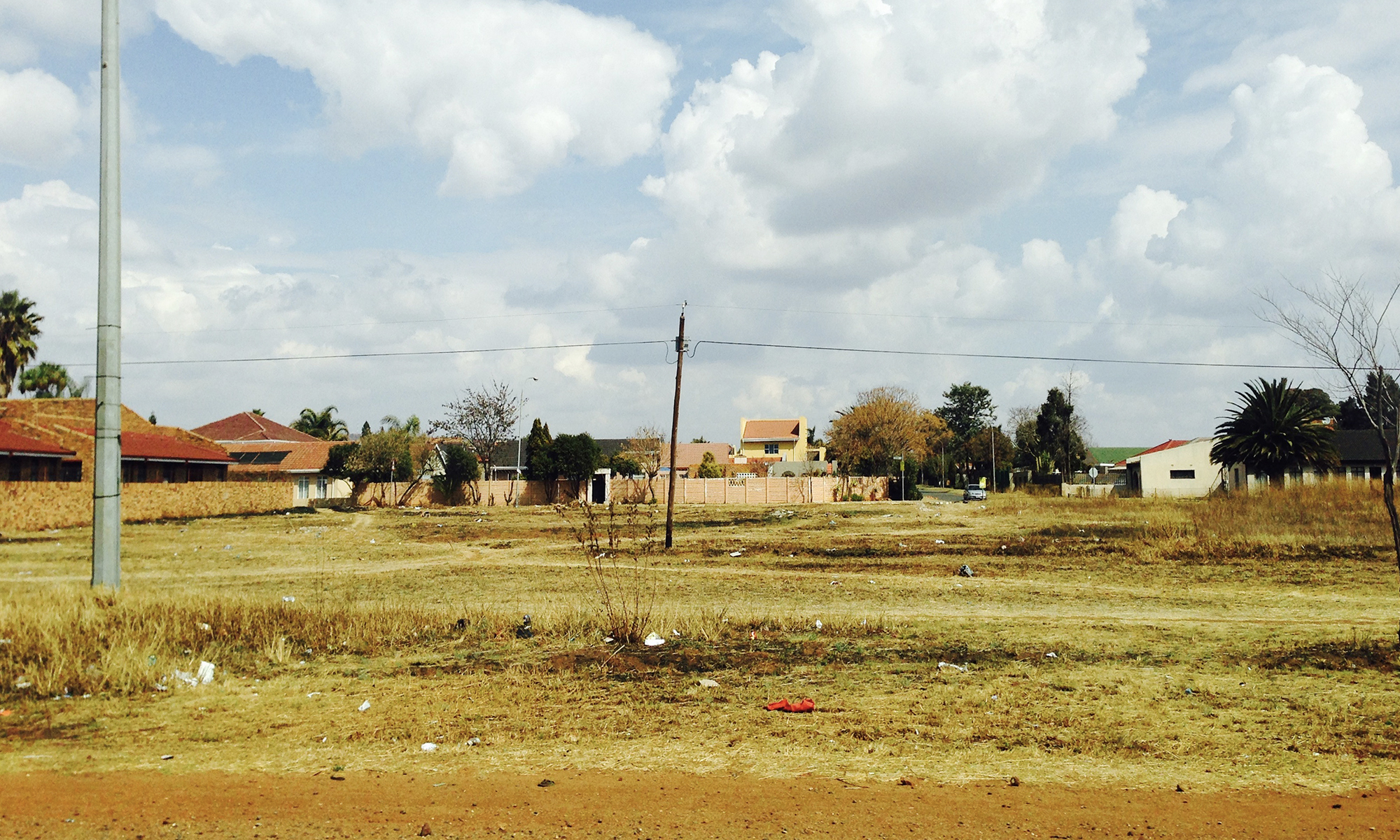
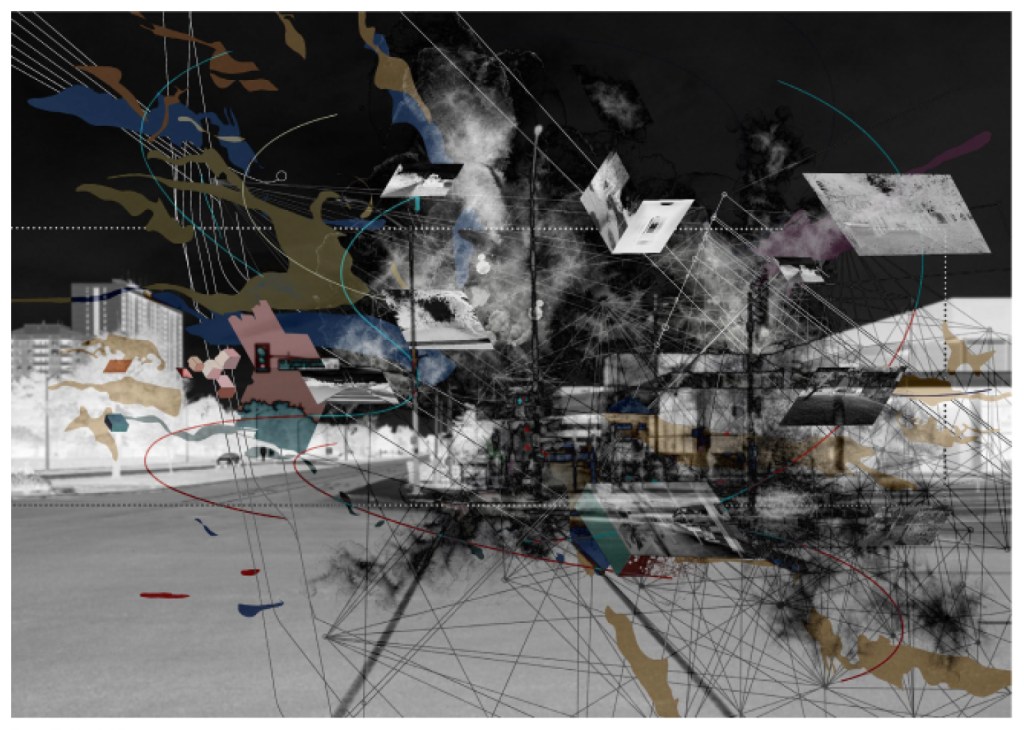
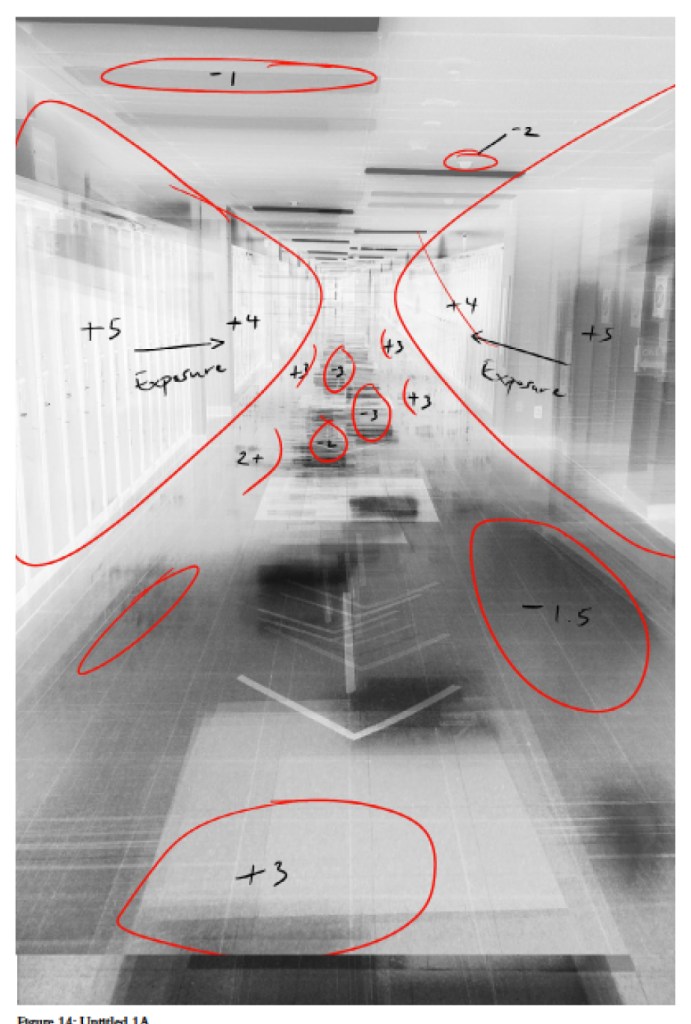
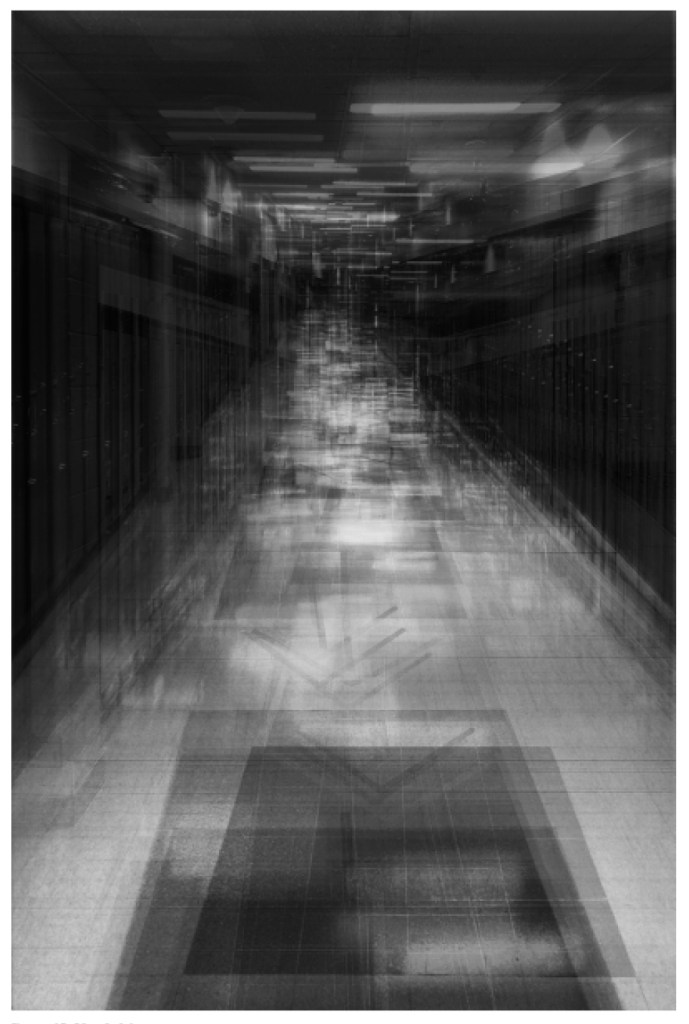
Between this Space and Me is a meditation on the inextricable entanglements of racialization and the built environment. This link furthers the uneven development of racialized ideologies exhibited through a continuation of particular histories, power, extractive capitalism, and social policies. Through a lens of whiteness, these socio-spatial inequalities fit into a historic pattern of dispossession and urban renewal that paints a distorted picture of marginalized spaces in Canada. This thesis elucidates, interprets, and speculates how this historic pattern, like an algorithm, plays a role in the production of the racialized spaces. Using photography and mapping, the research investigates the concept of shadows as a space to explore what remains after this algorithm takes hold. It thinks along, with, and through the shadow as an episteme: as a way of knowing and unknowing a place using traditional darkroom methods and exposure regulating, post-processing techniques. Using the photographic framework of ‘Dodge and Burn’ and personal, epistolary narratives, the work re-frames the observer’s relationship to the built environment, imparting a sense of agency over what is hyper-visible and erased within the shadow.


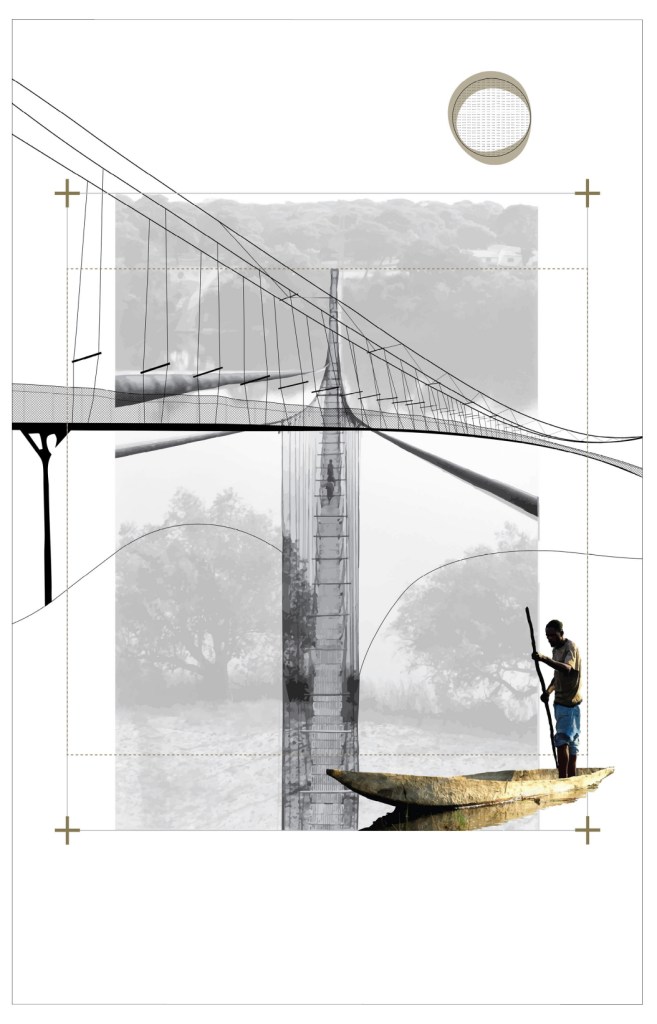
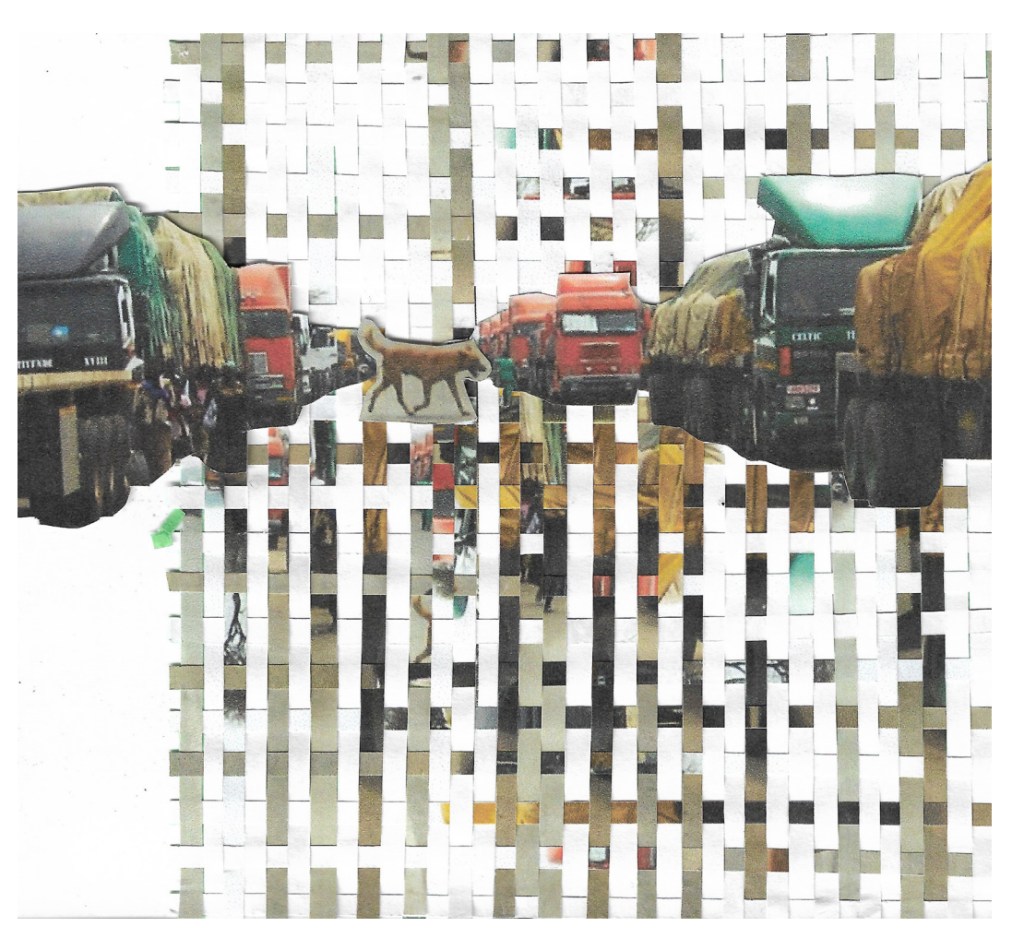
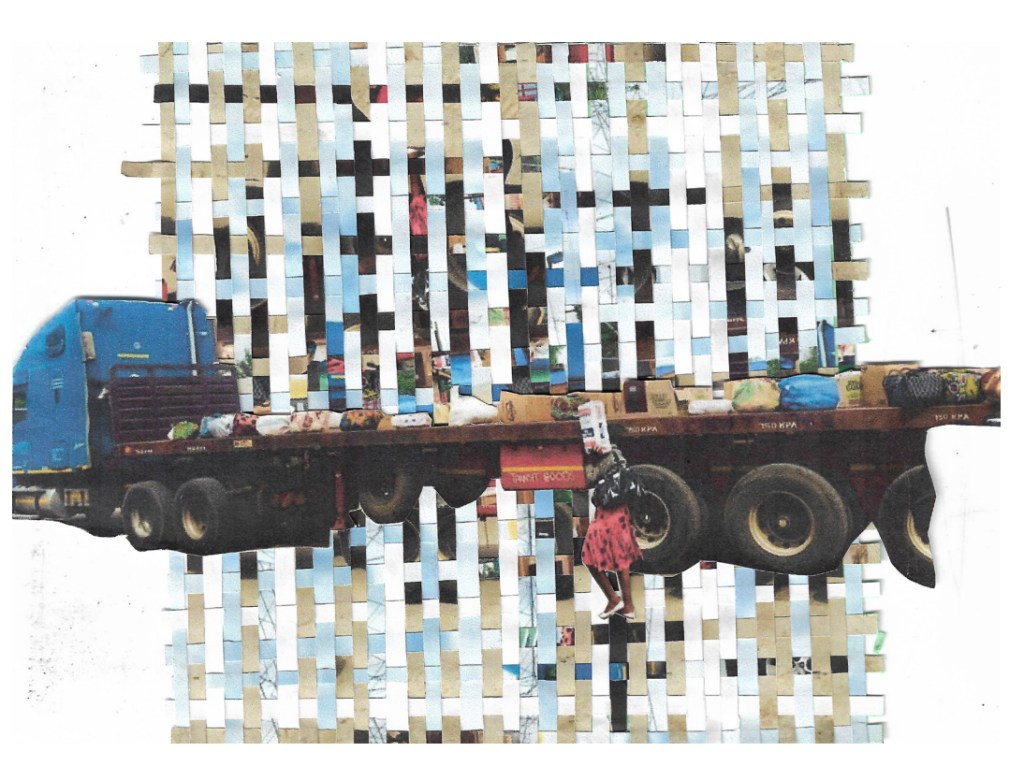
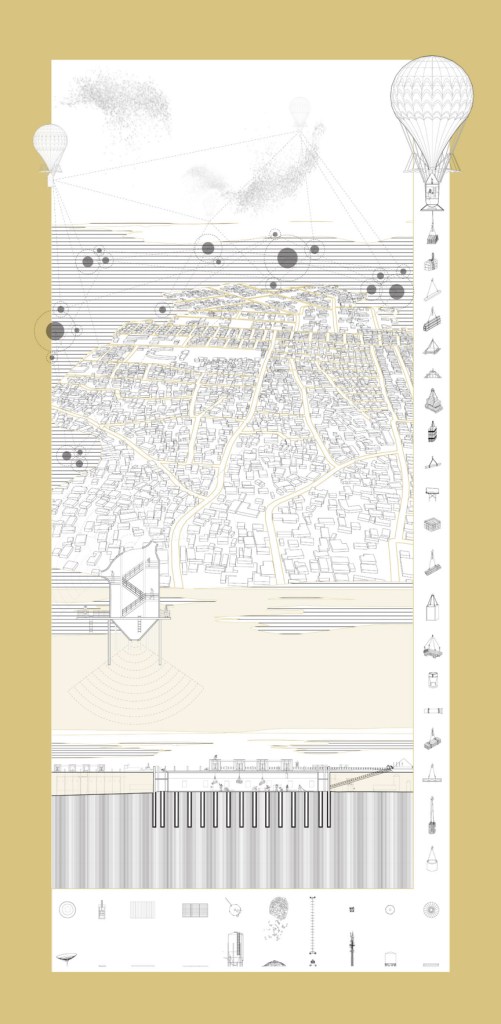
2022: Rudo Mpisaunga: // Towing the Line: Unravelling & Reconstructing Identity along the Zambezi River
Towing the Line refects on systems of connection and disconnection in postcolonial southern Africa along the Zambezi River. With Namwali Serpell’s novel, The Old Drift, as a catalyst, this, project questions how we form and reform identities—individual, collective, shared, and national— and examines how they manifest spatially and shape our relationship with place and space through a world-building exercise. African identities are in a constant tug of war, a struggle to reclaim narratives and the right to self-determination. Externally imposed identities have historically determined the position of Africans in the world and were formed by tearing and stitching together peoples, territories, and boundaries. These ruptures and sutures cannot be reversed but must always be reckoned with. My research interrogates colonial boundaries and edges to propose alternative ways of connecting and building relationships on the continent.



2022: Anthony Youssef // Meaning (a)drift:The movement in the Holiday Inn Beirut’s socio-political narrative
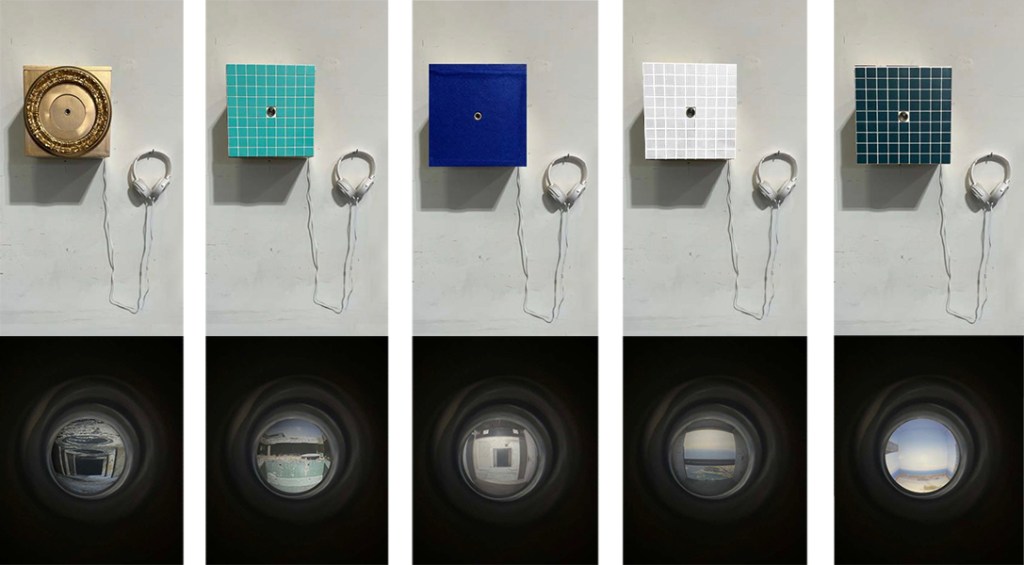
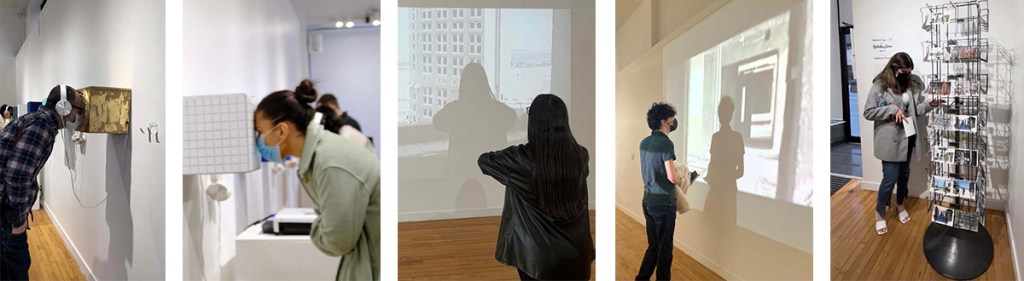
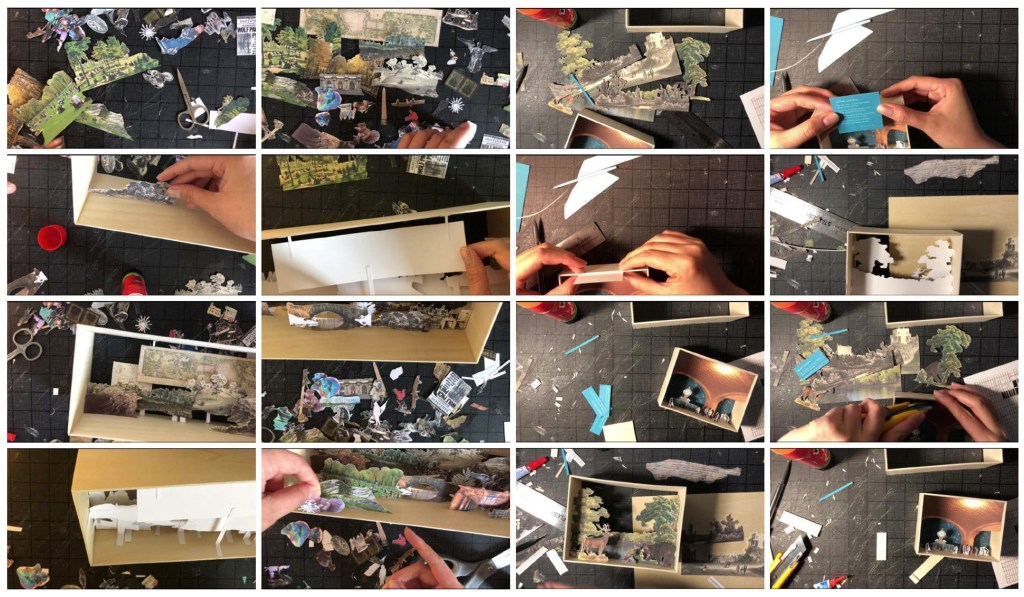
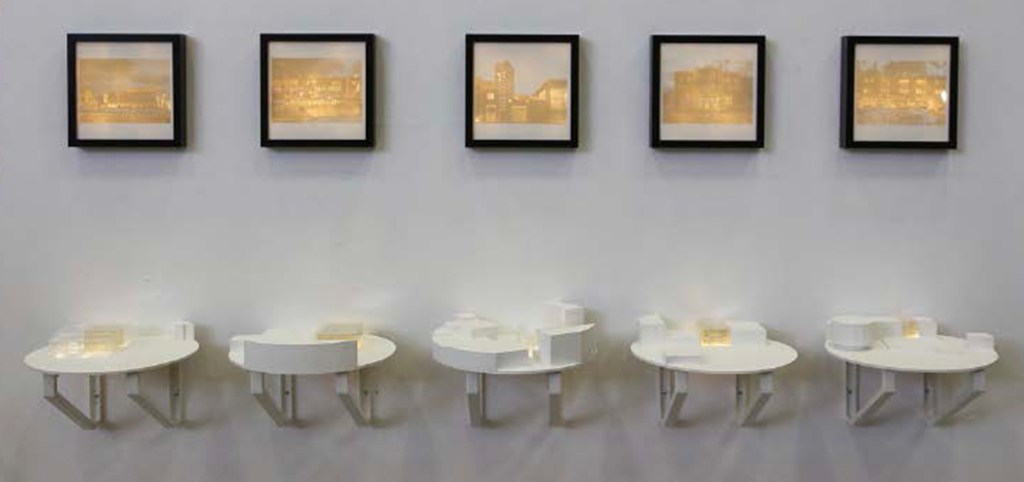
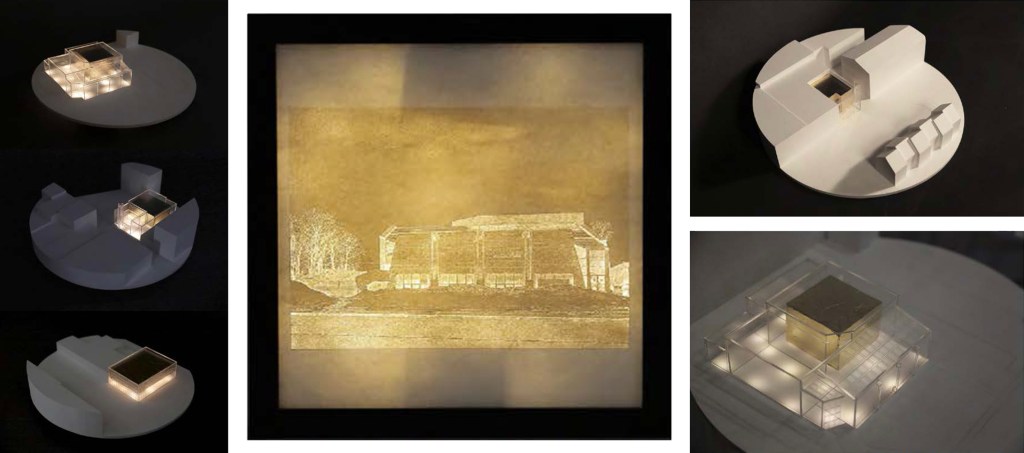
This thesis explores the movement in the Holiday Inn Beirut’s socio-political narrative and traces the hotel’s transformation from a modernist icon, to a war apparatus, to an unintentional monument. The Lebanese Civil War (1975- 1990) has had a lasting impact on the city and its urban relics. Among these relics is the Holiday Inn Beirut. Commissioned by developer Abdal Mohsin Kattan, the Holiday Inn Beirut was designed by French architect André Wogenscky, an associate of Le Corbusier’s Rue de Sèvres studio, and his Lebanese associate Maurice Hindie. This multi-method research project explores the hotel’s socio-political narrative. It results in the production and curation of an exhibition of dioramas, video and postcard installation of the hotel’s spaces. Through this exhibition, viewers are invited to physically enter and explore the Holiday Inn Beirut as a lived and experienced space.



2022: Mira Burghed // The Archive of Lost Stories & Dormant Memories: A Portal into the Oasis
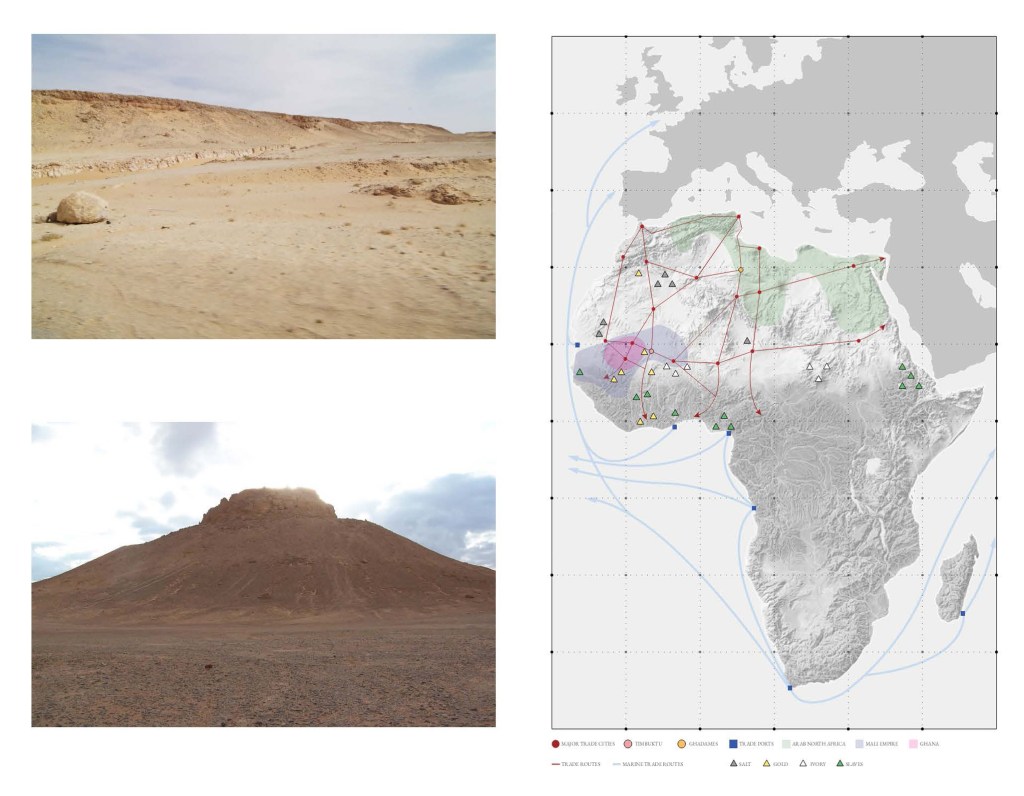
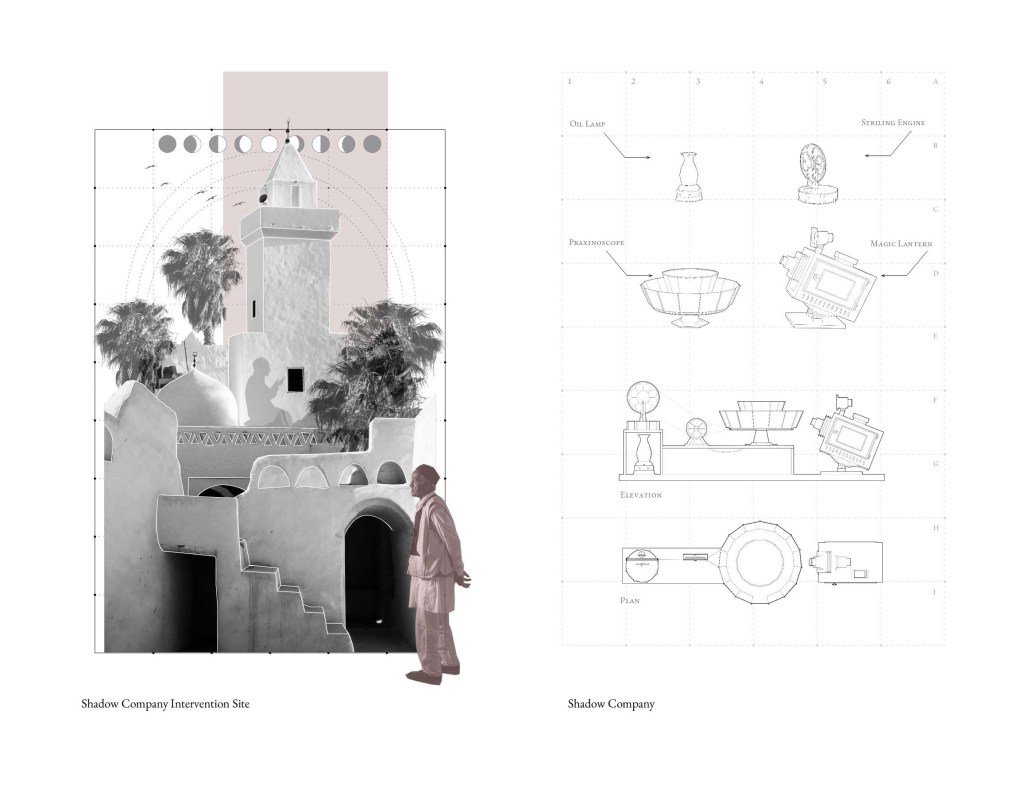
The Old Town of Ghadames, in Libya, is a desert oasis that is a portal through time. Its walls have long carried with them the scars, traces, and stories of its ancient past. Despite its abandonment in the 1990’s, every summer it is rejuvenated by the temporary migration of its past inhabitants, from the modern, concrete city to the old town and its center. Ghadames continues to hold the latent memories of its history and past, in its stone and plaster walls, its desert landscape and rich cultural and experiential palimpsests. This thesis is a meditation on the multiplicity of Ghadamesian narratives, histories and experiences as a means of revealing, analysing, and interpreting the spatial possibilities of the town as an archive of stories . It uses semi-fictional stories to speculate on a series of interventions that engage with past and present, and explore architecture’s entanglement with place memory and time.




2022: Claire Merrick // The third Seascape: A Deep Narrative of the California Coast (Co-supervised with Professor Lisa Moffitt)
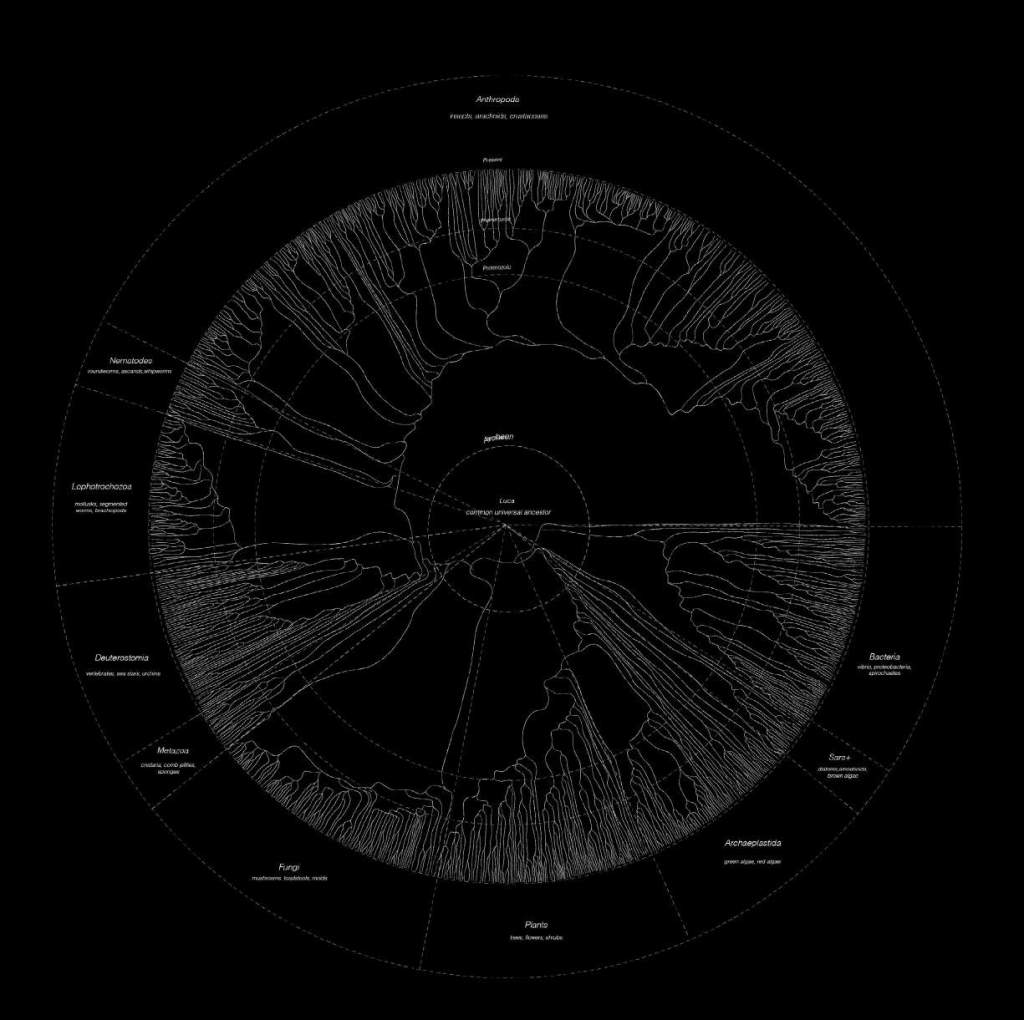
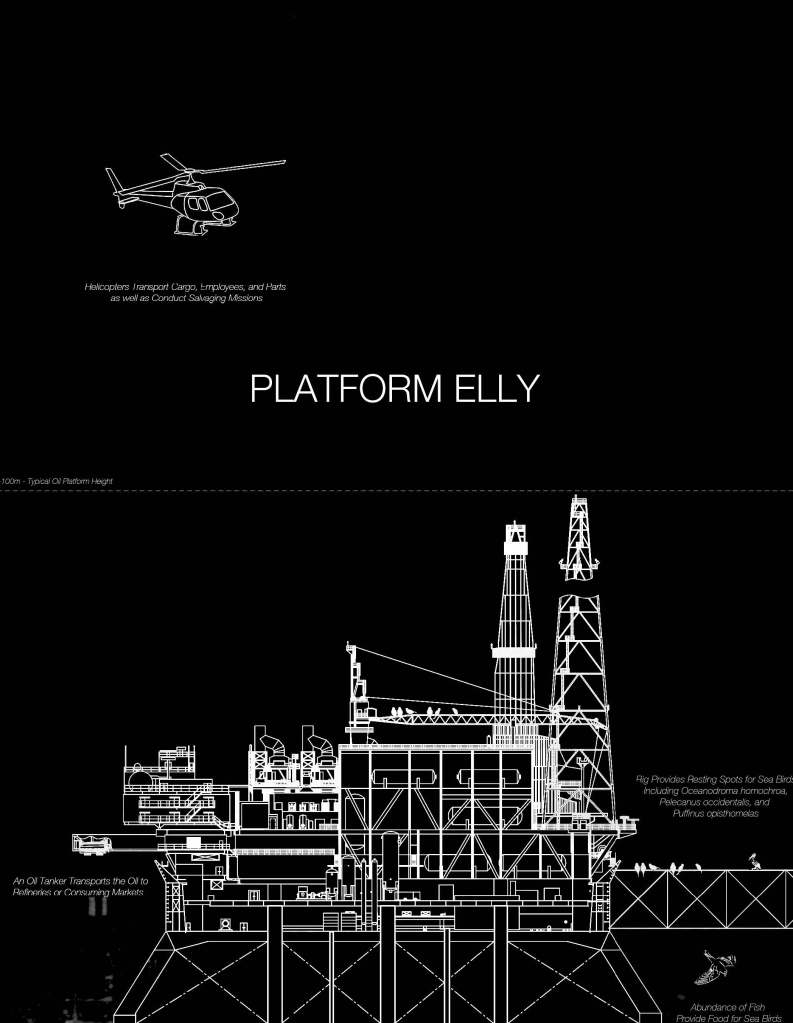
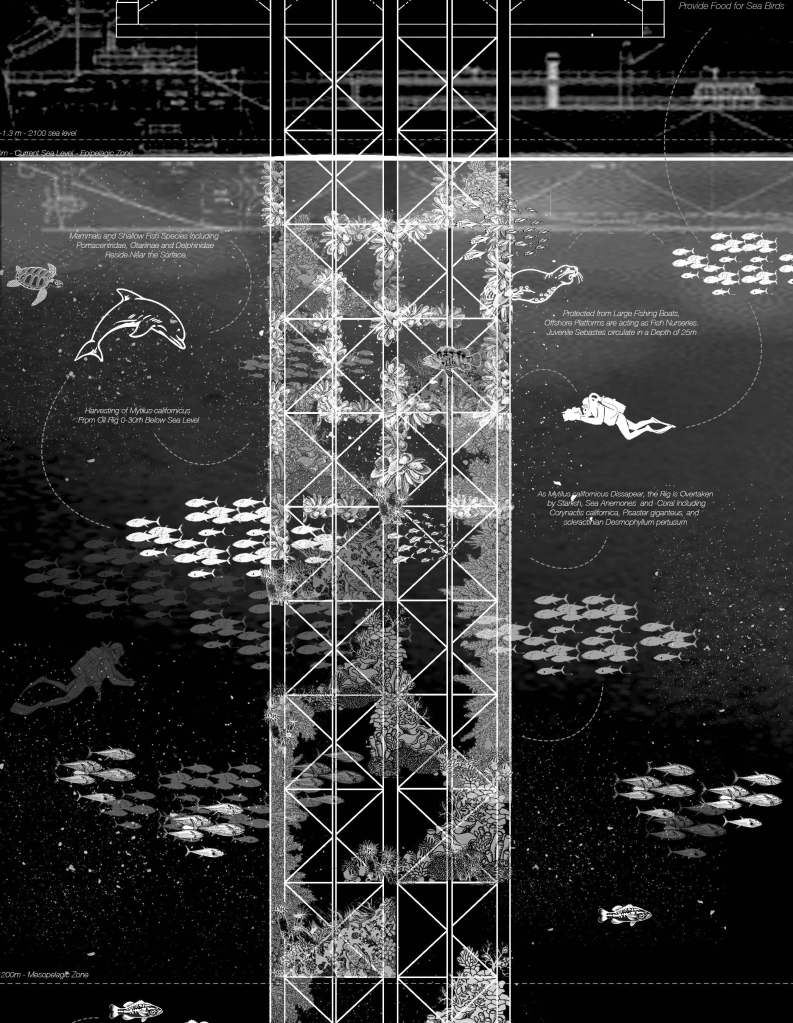
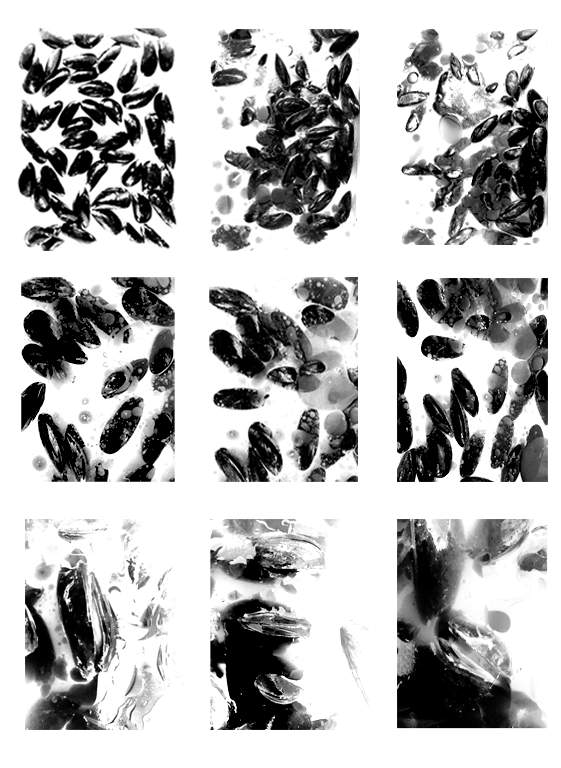
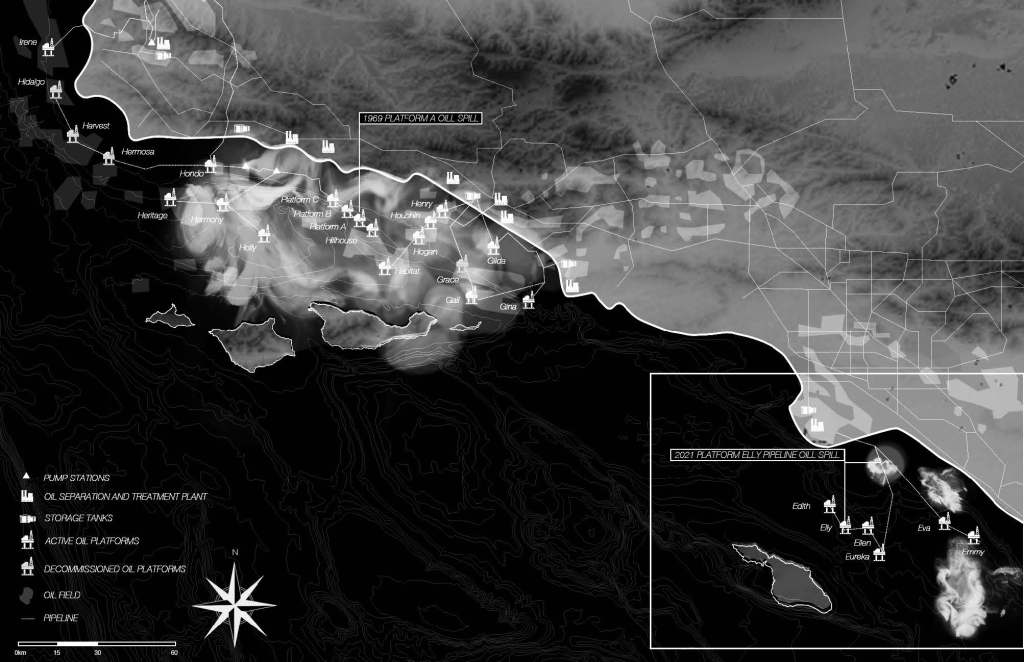
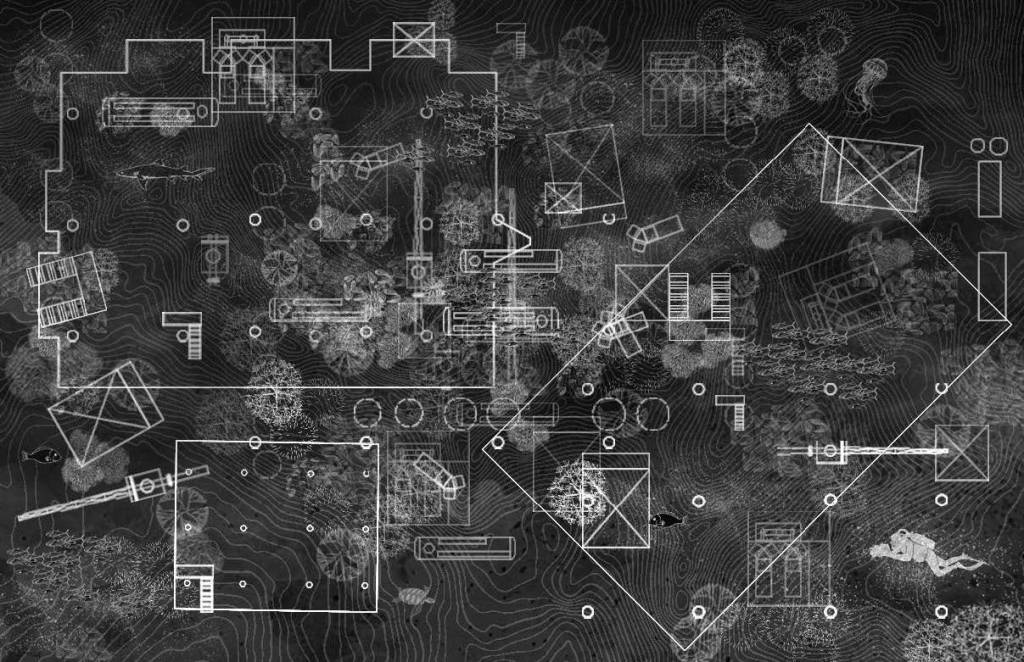
Twenty-seven offshore oil platforms line the coast of Southern California from Point Conception to Huntington Beach. They are some of the oldest in the world and are scheduled for complete decommissioning by 2033. Overtime, the rigs have adapted to the surrounding ecosystems, unintentionally creating habitat for fouling communities. The subsurface provides a vertical skeleton for coral reefs that support an abundance of marine life. This thesis reflects on kinship studies, deep time and the philosophies of Gilles Clément to inform it’s theoretical positioning on design. Making the depths of the ocean visible fundamentally alters our relationship to the living and non-living entities that occupy it. This, in turn, re-positions ourselves as kin in place, space, and site, prompting a re-evaluation of our actions, thoughts, and design motivations in the process. Structured as five stories, the Ecologist, Mussel, Fish, Oil Particle, and Gardener create a circular journey through time and space.



2021: Rehab Salama // AYAT AL-QAHIRAH: Cairo’s Cosmic Realms and Earthly Realities (Co-supervised with Johan Voordouw)
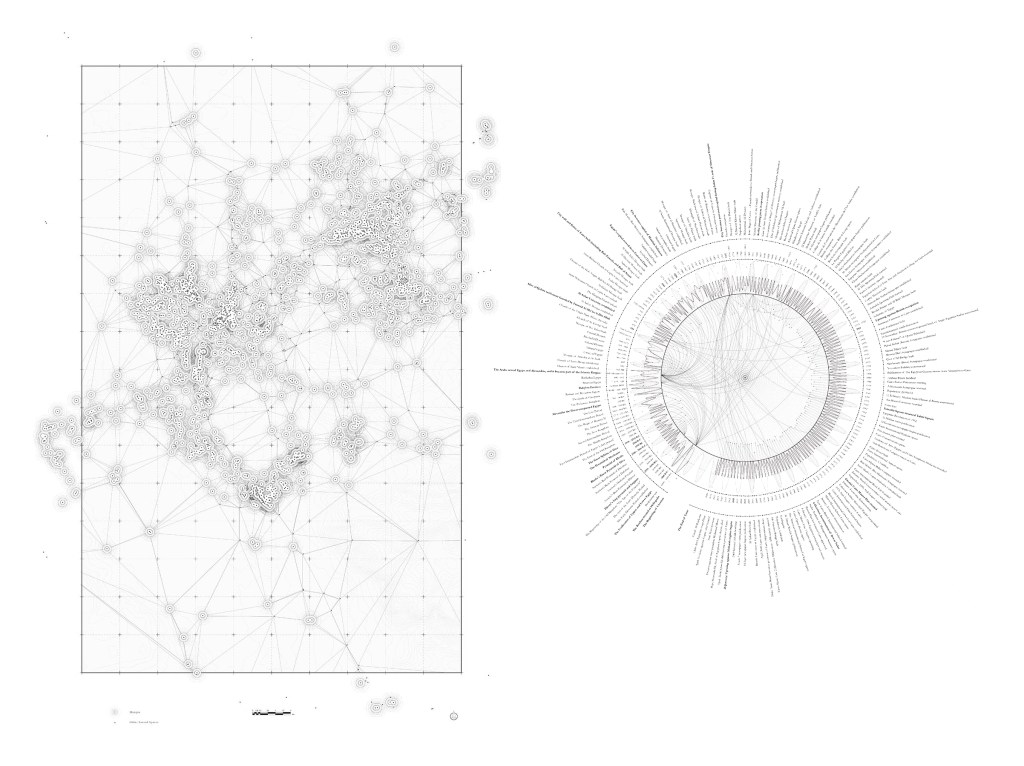
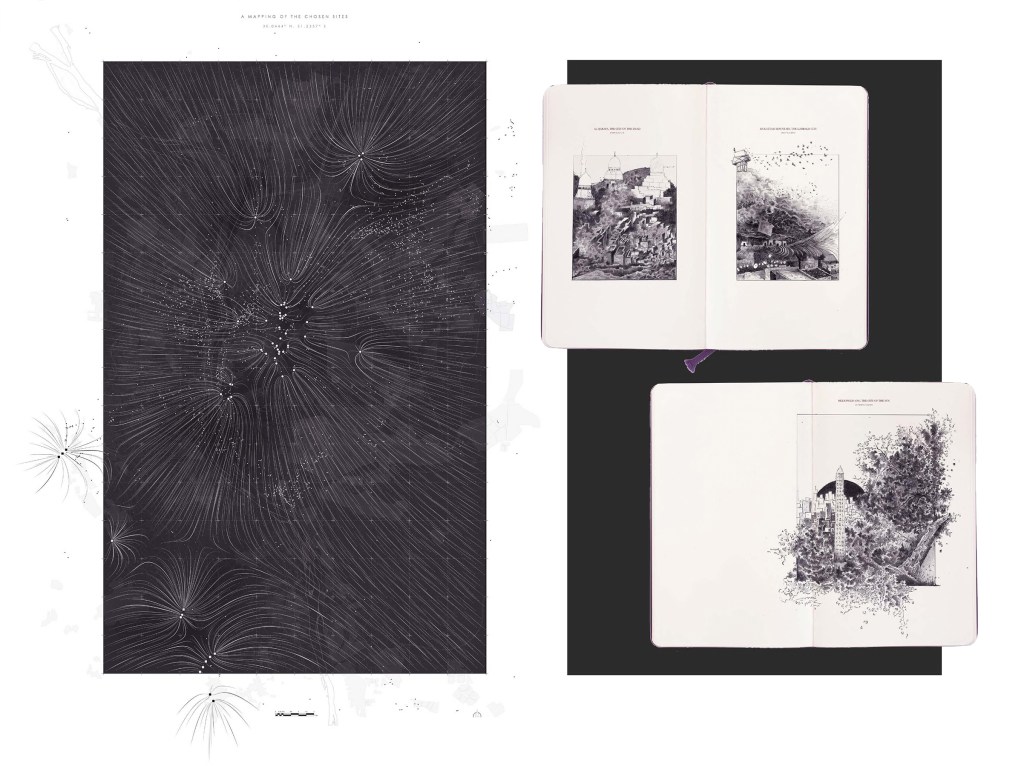
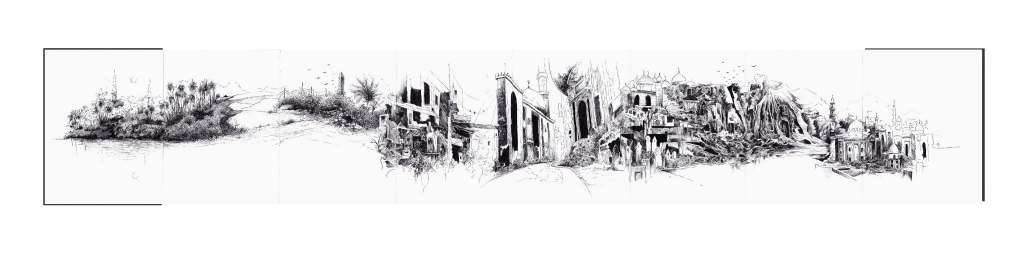
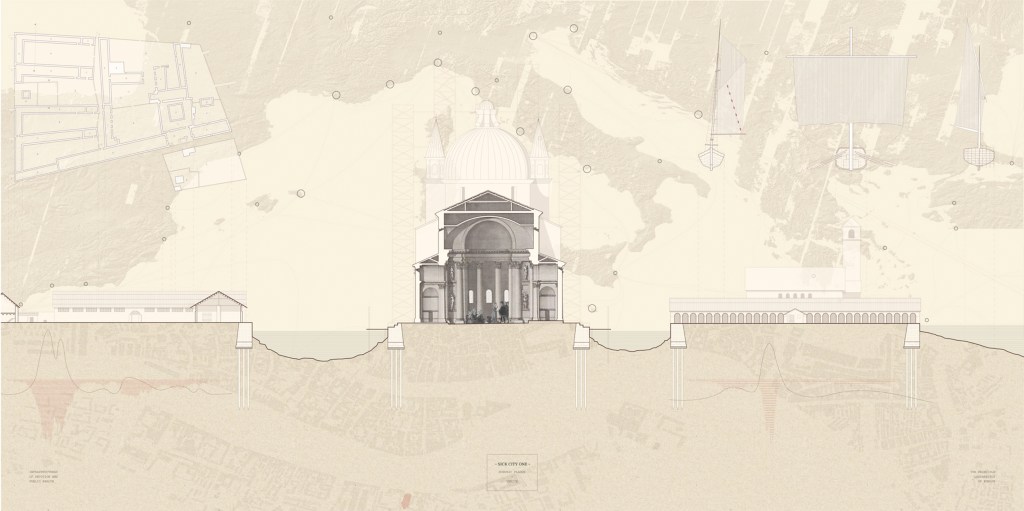
Āyat al-Qāhirah is an exploration of Cairo’s sacred architecture as a mediator where the human, the landscape, and the cosmos collide and coalesce. The project analyzes, interprets, and speculates how architecture and architectural representation become a spatio-urban bridge between the earthly and the cosmic. It is framed as a travelogue that links matter and spirit. The thesis uses drawing as a catalyst to propose a series of conceptual architectural experiences and moments that negotiate a network of thresholds between the sacred and the every day as a register for the visible and the invisible. The project proposes a network of architectural tethers, that link this world and imagined corollaries. It connects the seen and the unseen, the sensible and the unintelligible, the physical and the metaphysical, the quotidian and the divine. It serves as a timeless manifestation of hidden orders imposed on the material world through the constant motions or harakat – of the cosmos and earth.







2021: Camille Ringrose // Through Thick and Thin: Story Space on Rannoch Moor
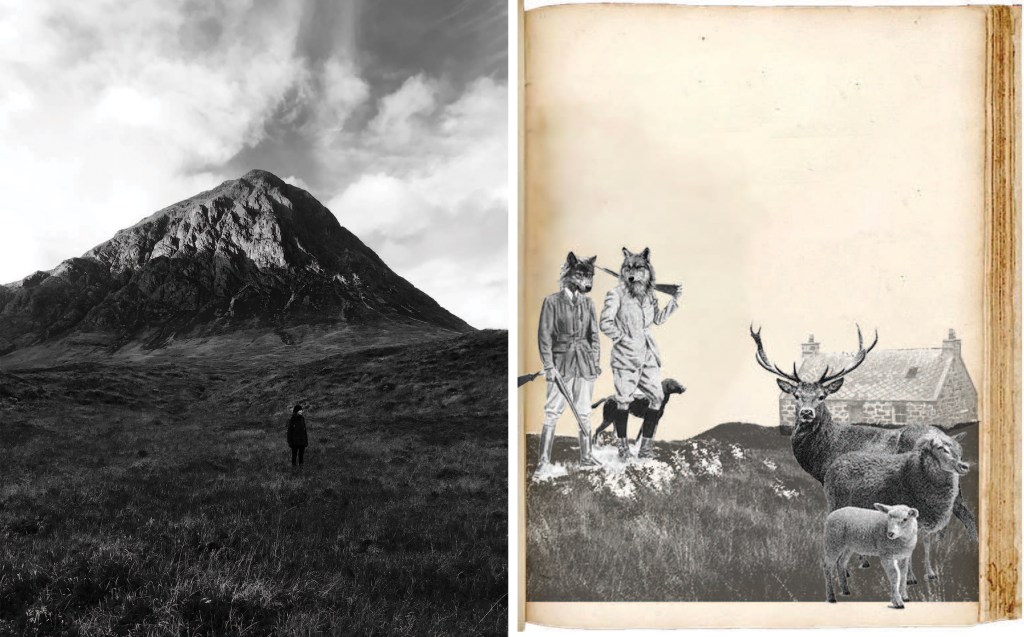
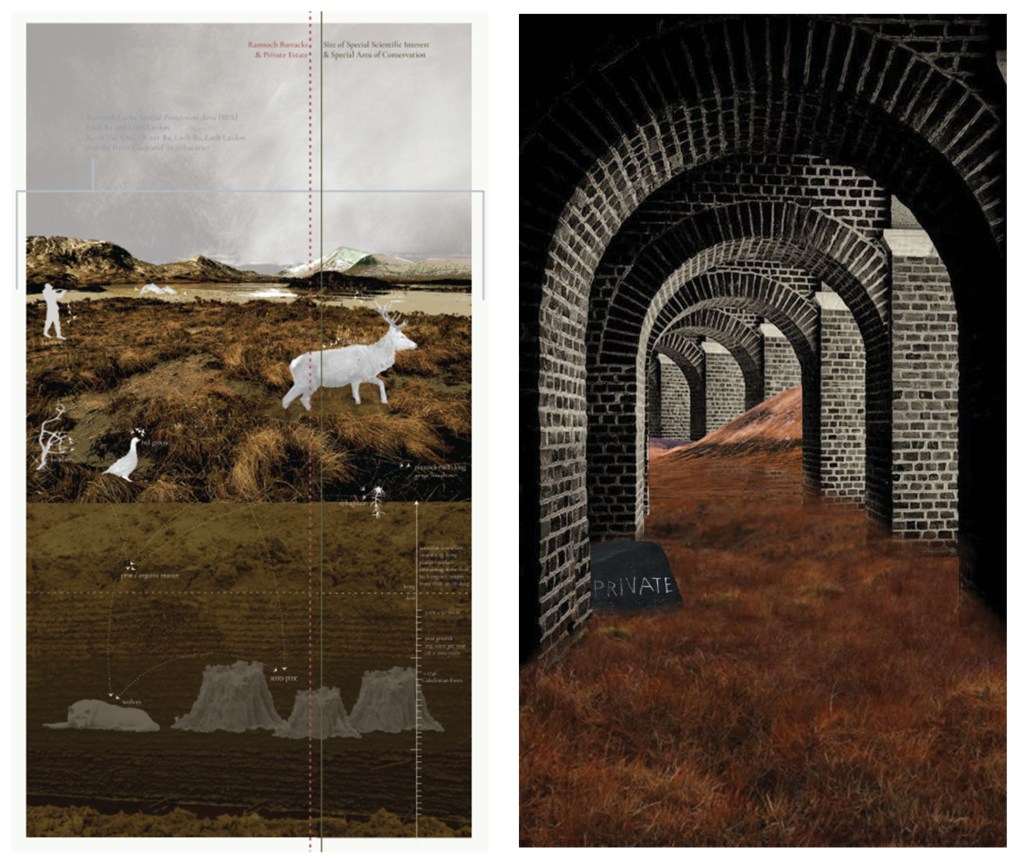
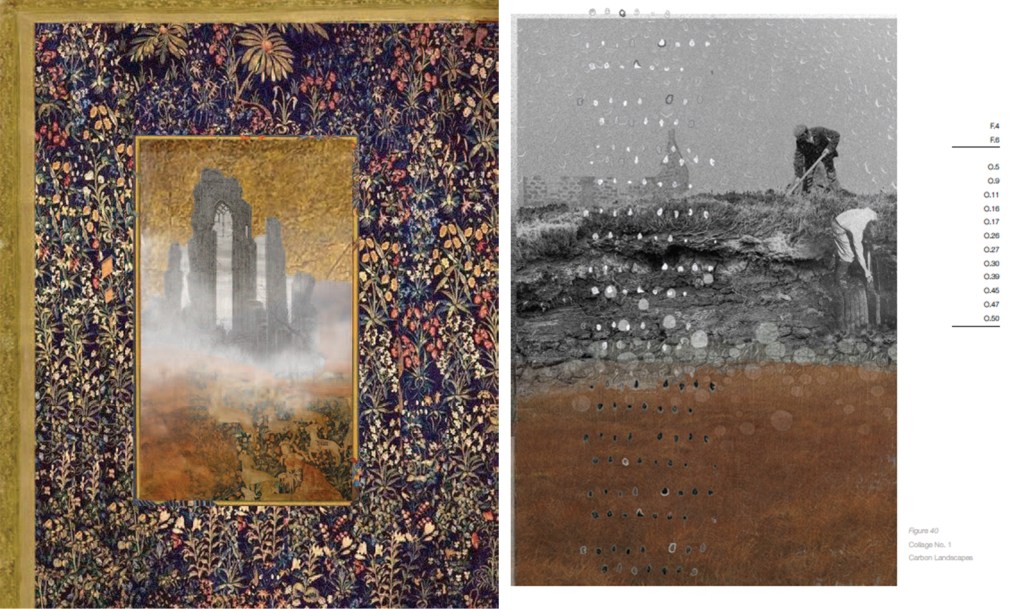
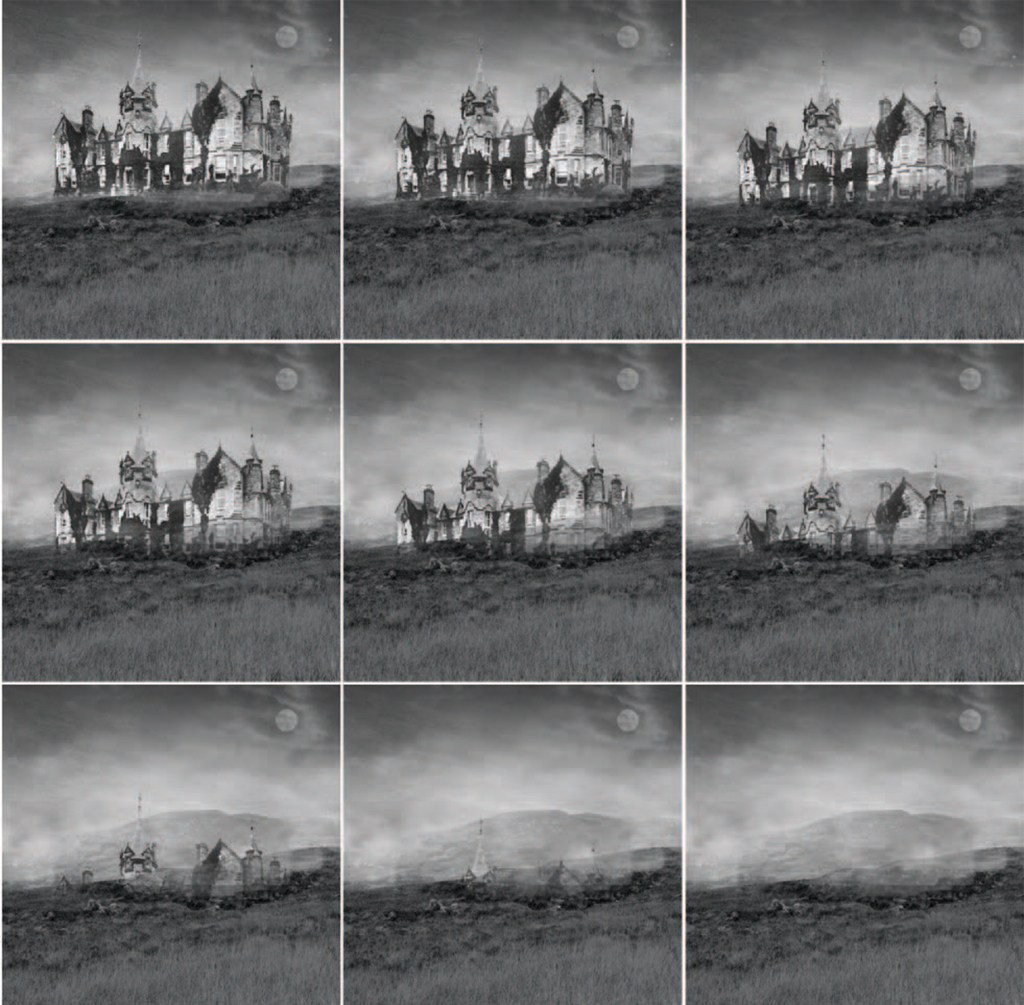
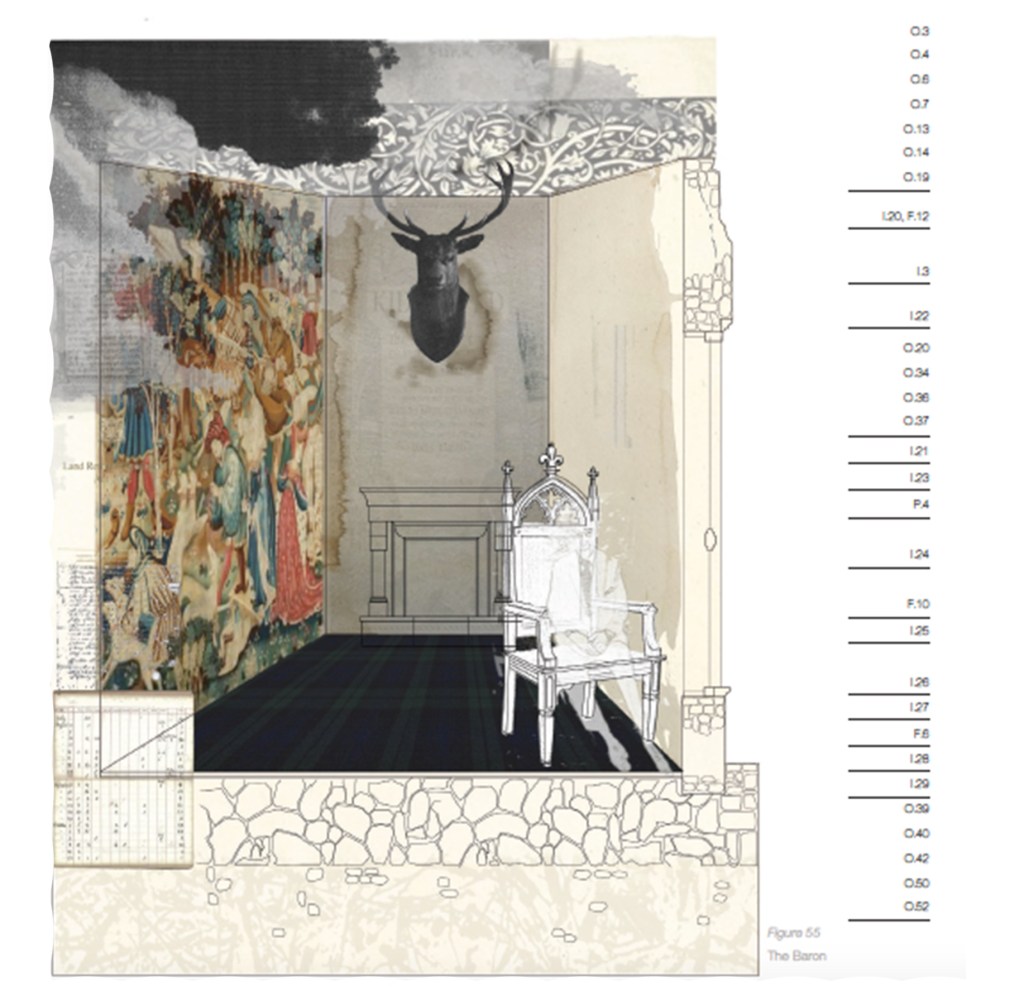
This thesis proposed a compilation of fictional narratives that reflect on the moor as ground, as an unstable terrain, of burial and wetness, and proposes alternative ways of knowing through literature, folklore and story telling as a multiverse method of world-building. Can we use stories to design with precision – not as an act of probing for answers, for newness or novelty, but as a form of watching and waiting? Storytelling suggests a movement to look not to the past, or to the future, but to the deepness of the conditions that surround us, weaving together a more complex tapestry towards recuperation and resilience. This research uses a pluralistic approach (research, drawing, mapping, site-studies, stories, etc) to understand and investigate the relationship between storytelling and architectural representation. It tracks, traces, and upends – through thick and thin – notions of geological time, history, literature and lore through a speculative imaginary of Rannoch Moor.

2021: Shannon Clark // Post-Pandemia at the Poisonnerie Shanahan: An Account of Sick Cities and Their Remedies
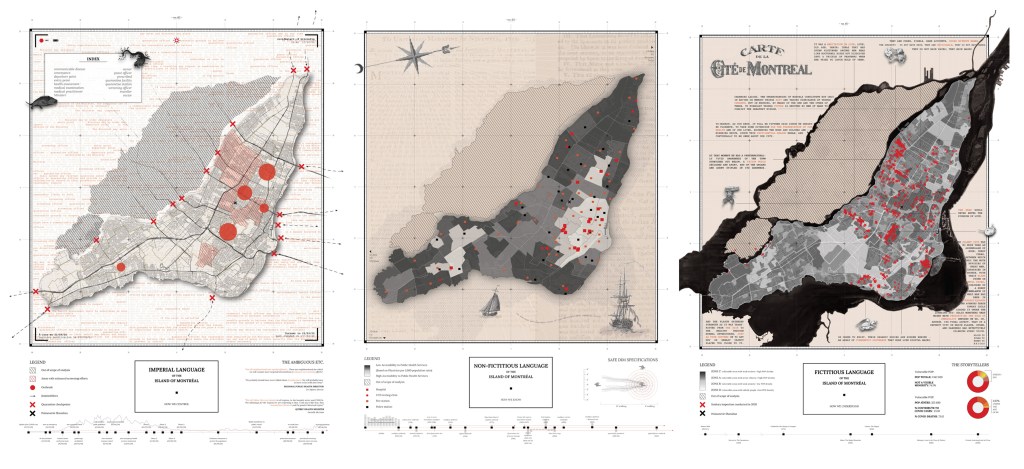
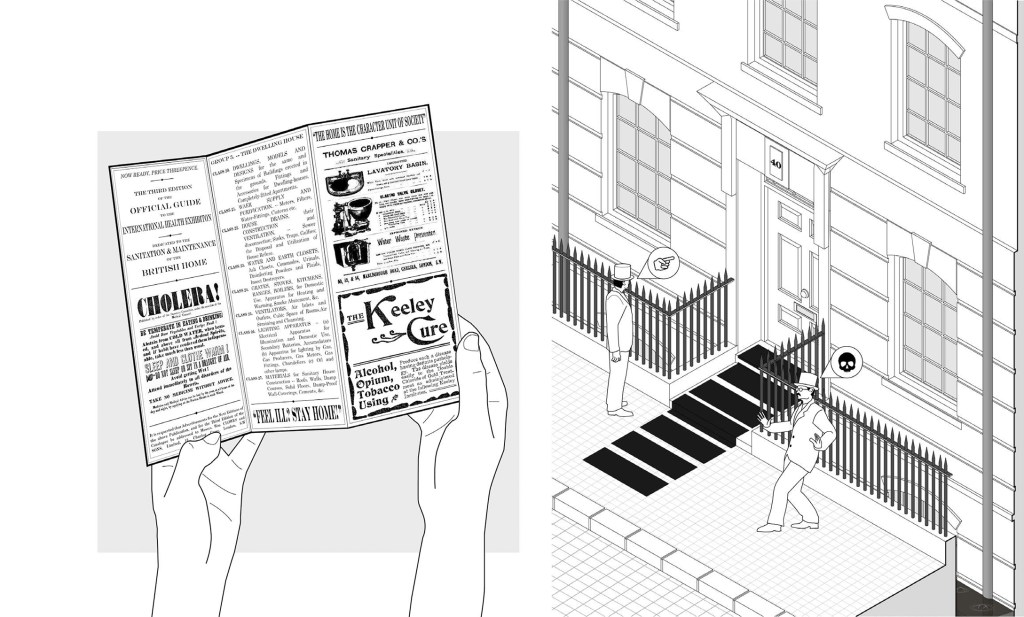
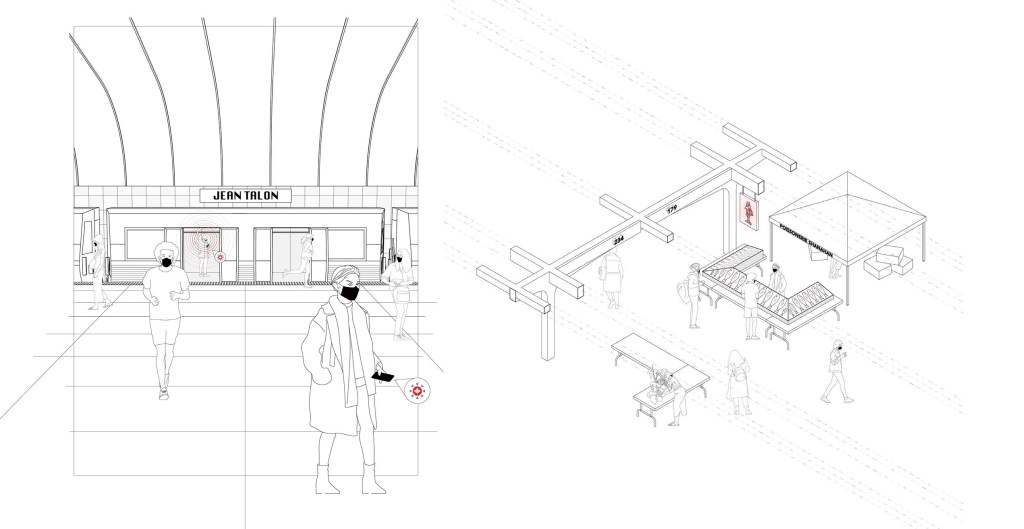
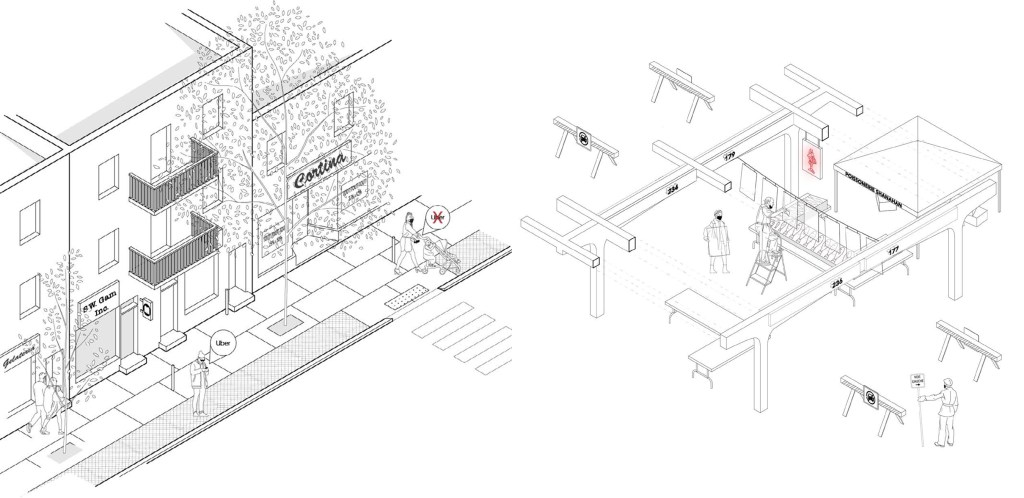
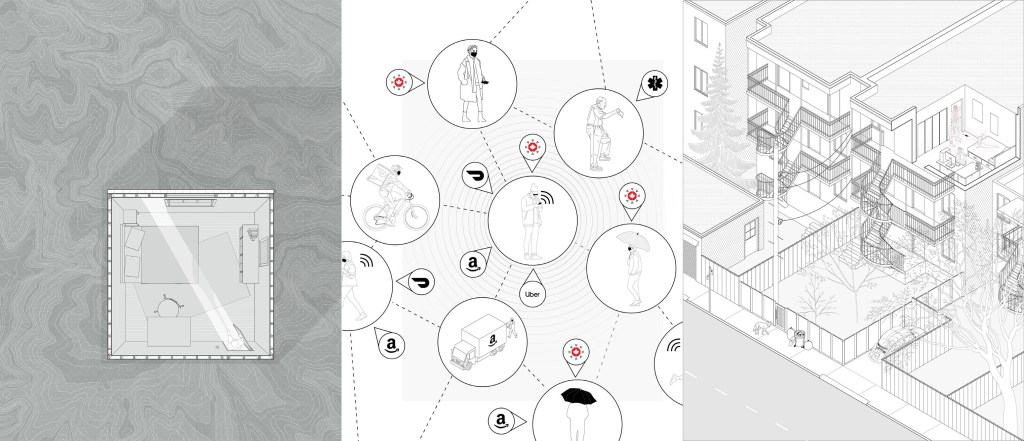
An epidemic is not simply biological, but rather a spatial phenomenon that mutates sociopolitical constructions. The mysteries and fears associated with the lurid metaphors of disease have landscaped the city – the typical setting for those thought most susceptible to illness – as though we are looking at, as Frank Lloyd Wright observed once, “the section of a fibrous tumor.” This thesis speculates on the transformations of space and human relation through epidemic scales. Set in the fictional Poissonerie Shanahan in Montreal’s Jean Talon Market as envisioned by the Quebecois novel, Nikolski, this research draws parallels between the tools of past urban epidemics and current morphologies as a result of COVID-19. By using fction as a template to understand the intersections of architecture, urbanism and public health, the thesis chronicles an epidemic representation in order to exercise our empathetic intelligence in the face of a global crisis that has rapidly spatialized blame.




2021: Shelby Hagerman // A Memory Palace for the Collective Mind (Co-supervised with Zach Colbert)
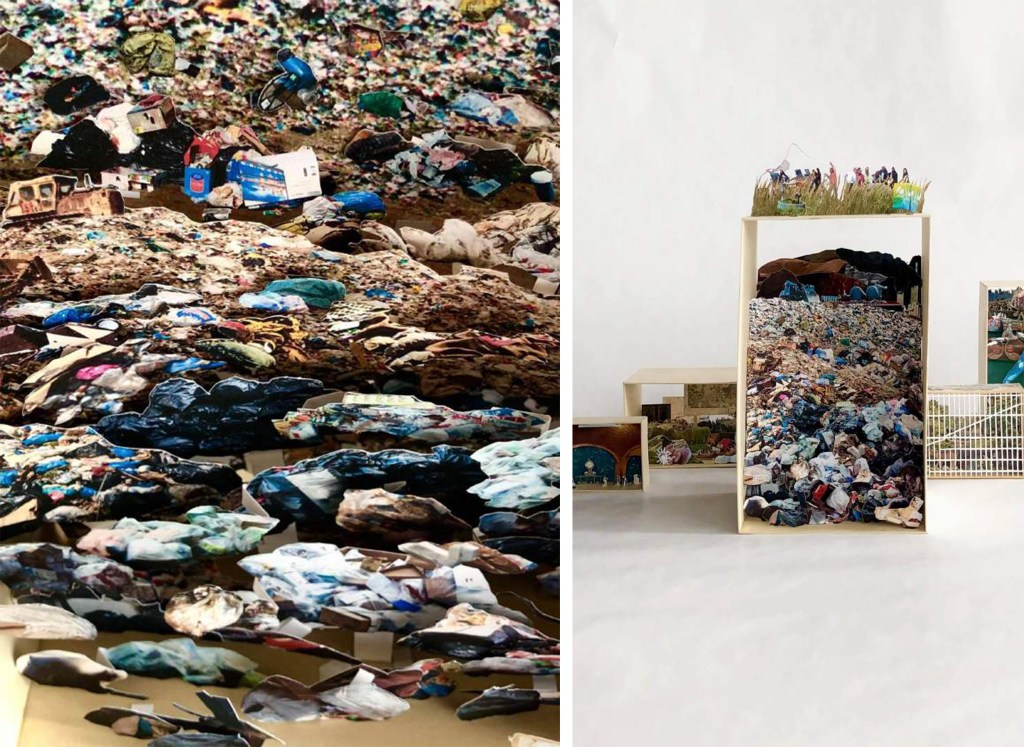
This thesis explores the notion of the memory palace to investigate how the world we live in can be imagined in the mind. Manhattan, New York City, is a memory palace that reframes and reorients agency, understanding and concern about the complexities of climate change. It becomes a shared mnemonic, exploring how a device that is typically individual can be curated to consider a collective mind. The creation of portals (micro and macro shadow boxes) that hold juxtaposed artefacts invite new understandings and imaginations of places in the city. They situate the local within the planetary, the individual within the collective, and the human-made within the expansive realms of the nonhuman. This project reflects on what it means to consider the present as something that reaches deep into the past, beyond typical human stories and scales to establish profound understandings of place, memory, and climate change.





2020: Zachary Coughlan // LIFE ON THE EDGE: The Archeologist, the Oil Rig, and the Newfoundlander
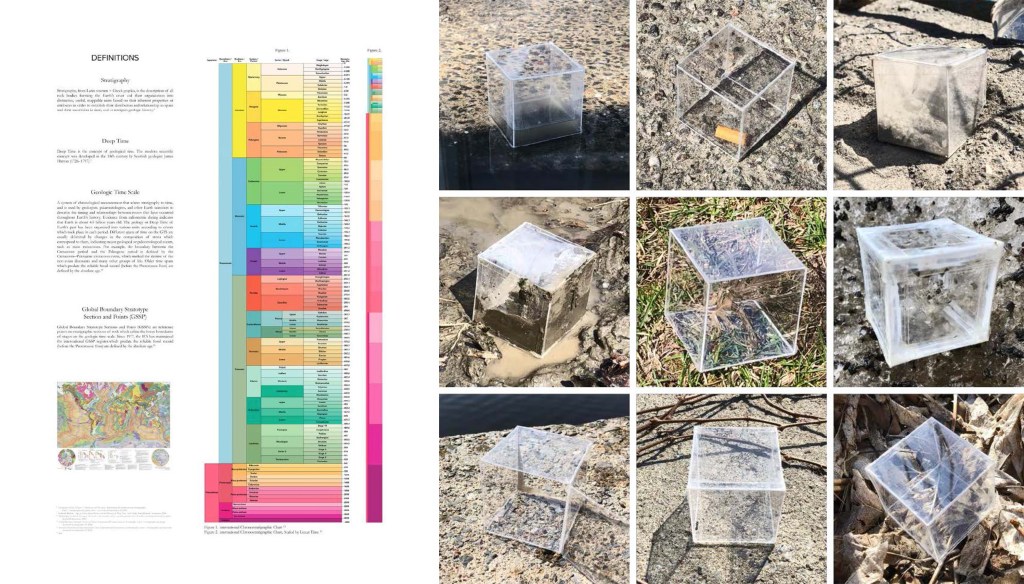
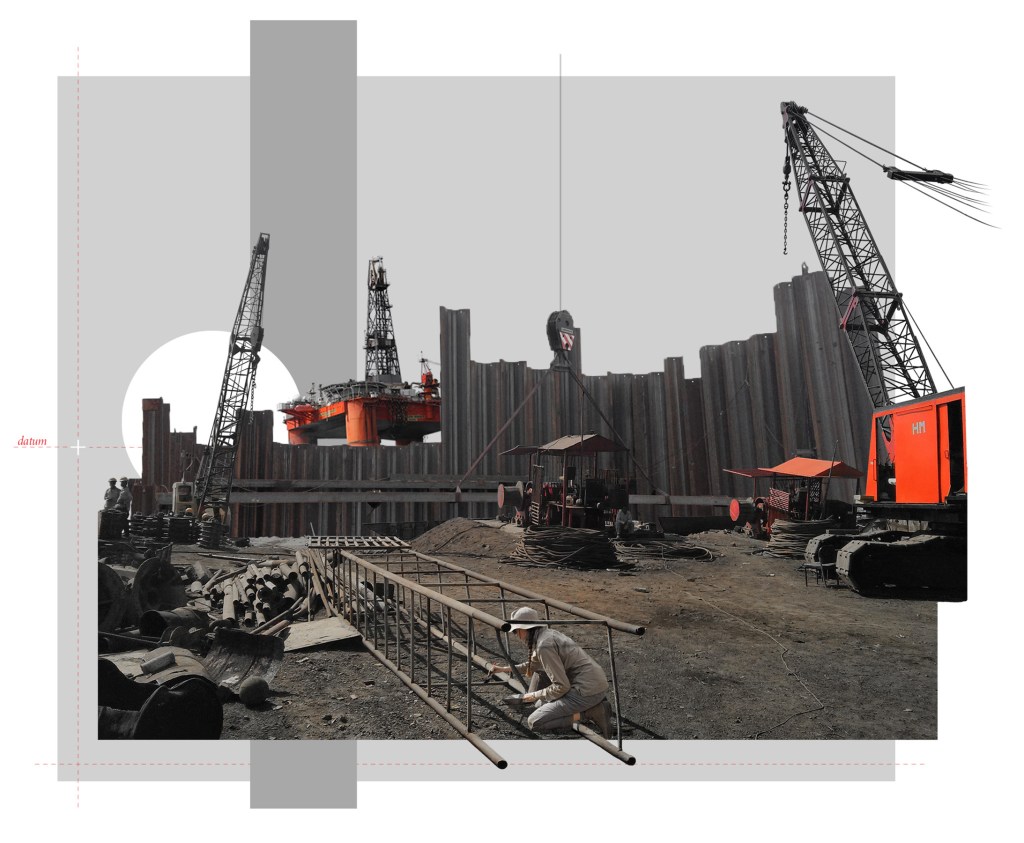
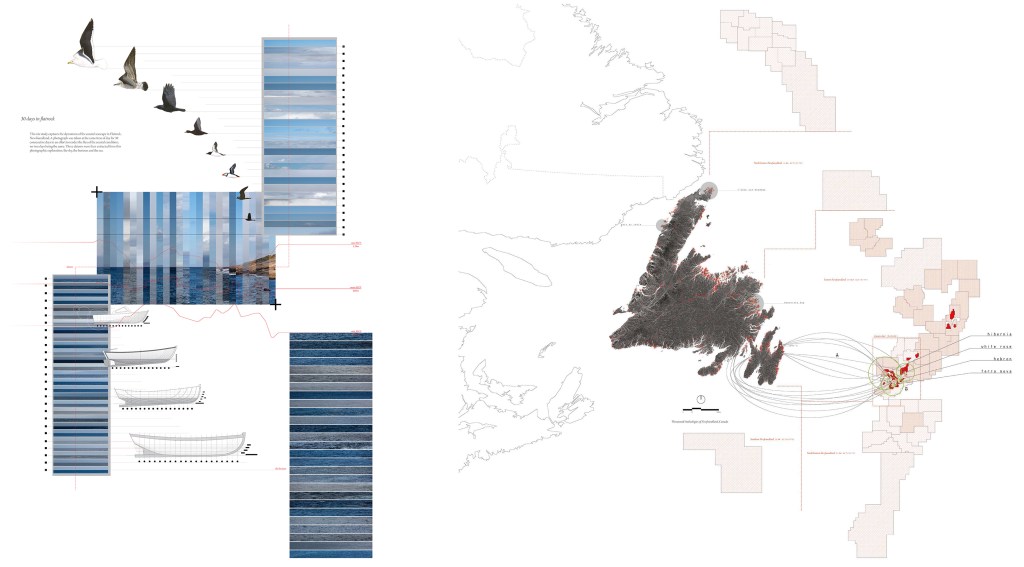
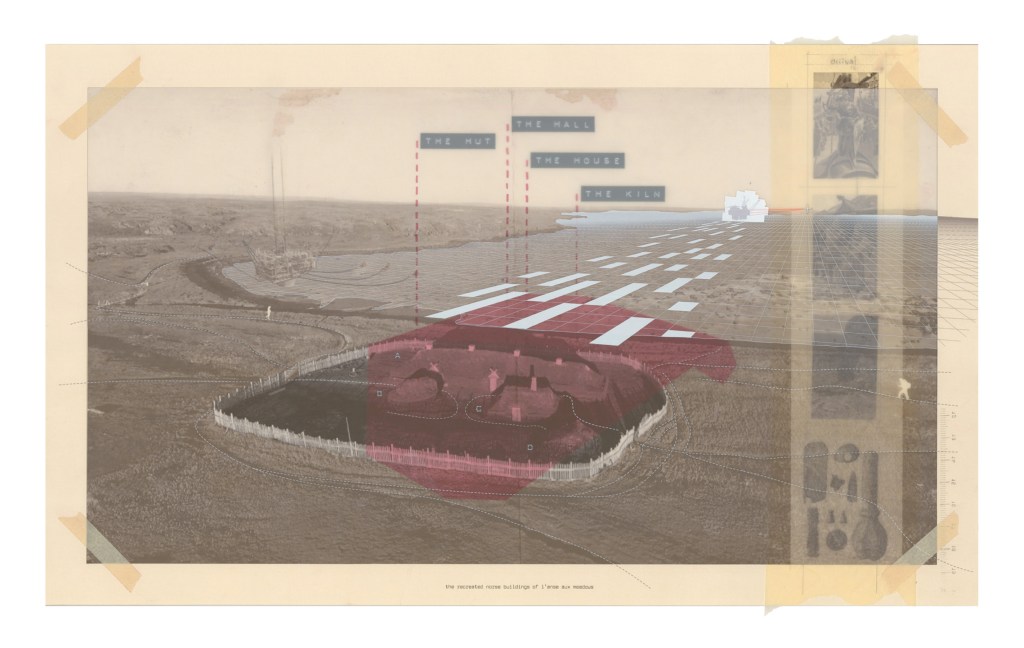
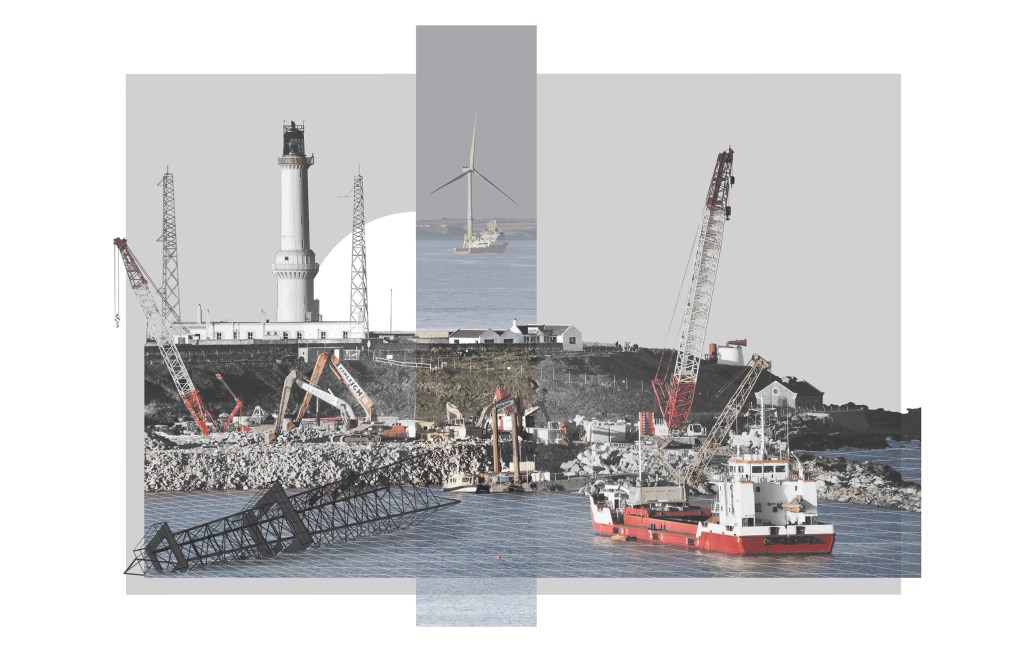
This thesis reimagines the UNESCO archeological site of L’Anse aux Meadows, Newfoundland in 2101; one year past the limit of current climate science predictions. In this projective future, the now obsolete infrastructures of Newfoundland and Labrador’s offshore oil rigs are moved near to-shore. The rigs are slowly and incrementally deconstructed, now serving as monumental scrapyards and material salvage pantries for a new working landscape on Newfoundland’s coast. Salvaged components shore up and transform the terrain, community and cultural heritage of the site and its immediate surroundings. This research by design project engages with questions of monumentality, counter-monumentality, and changing heritage through critical and speculative drawings and maps in a back-and-forth between water, landscape and the possibilities of a reconstituted future. The thesis attempts to grapple with the often fraught and complex histories – and futures – of resource traction and cultural heritage in a changing life on the edge.


2020: Angela Chiesa // To Discover a New Tomorrow (Co-supervised with Johan Voordouw)
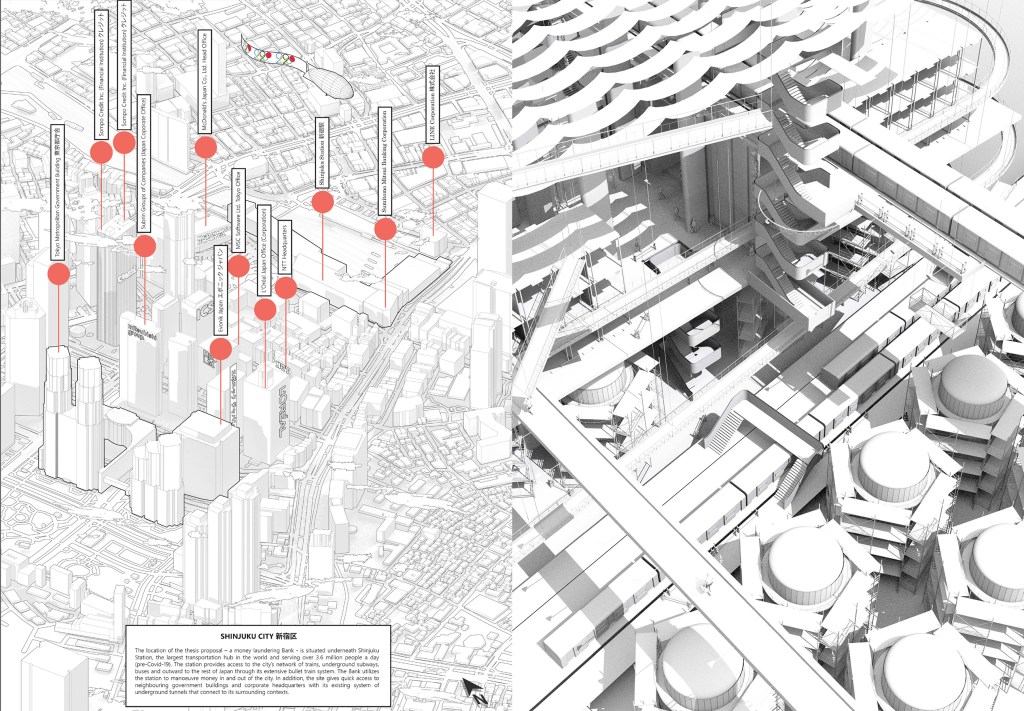
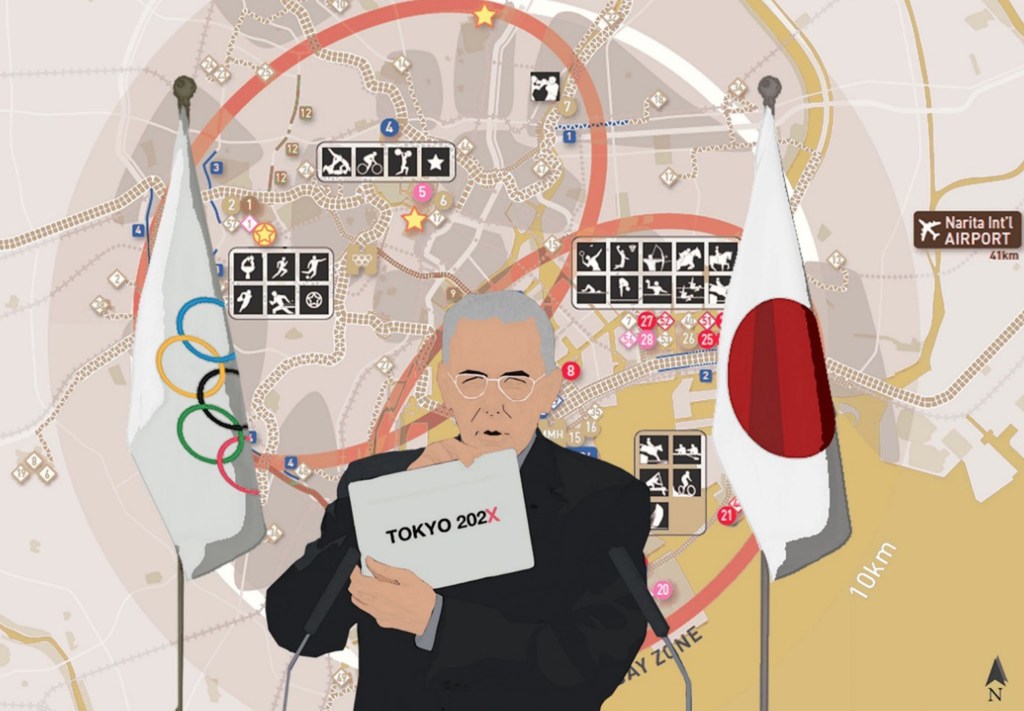
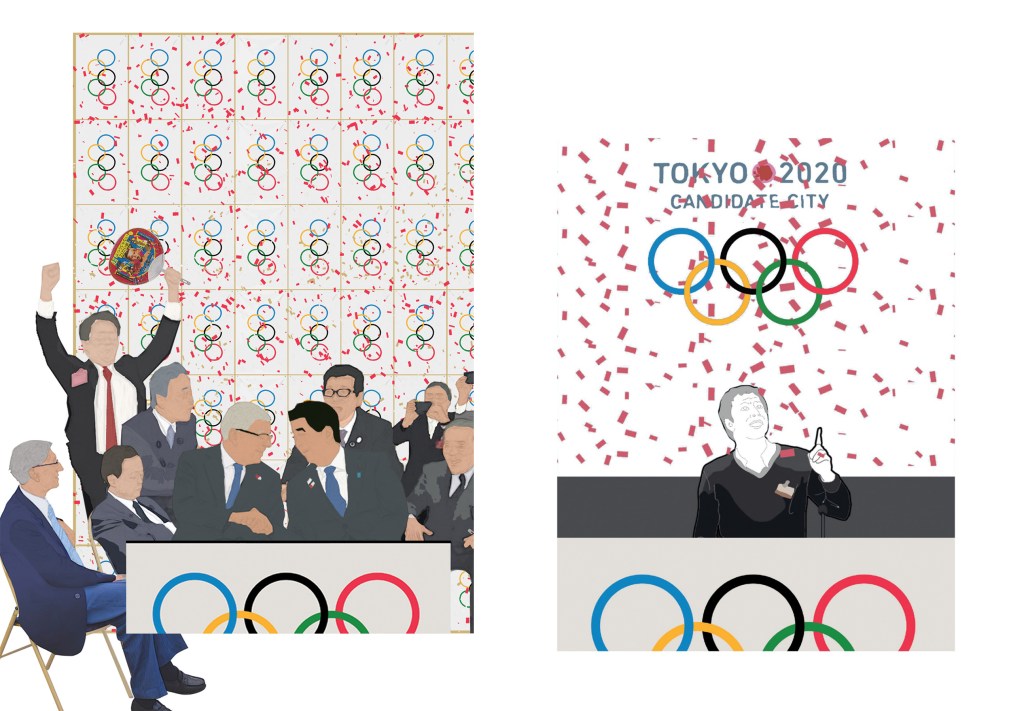
This thesis explores a speculative architectural critique of the financial waste resulting from the Tokyo 202X Olympic Games. The project proposes a hypothetical underground bank for money laundering which uses government funds to turn a profit for individual and corporate investors. Research examines Tokyo’s hosting of the 202x Summer Olympic Games, speculates on how the Government of Japan intends to (mis)spend funds allocated for the Games and how the government and major corporations might (mis)manage or (mis)use these large amounts of money. The thesis is a series of annotated images that describe this hypothetical narrative, and shows the perspectives of a set of characters throughout the city. Using a research-by-design methodology, the thesis explores the Olympics as a front and back-of house condition of infrastructural excess.


2020: Diego Juarez // New York Vertical: Circular Design + The Supertall Tower
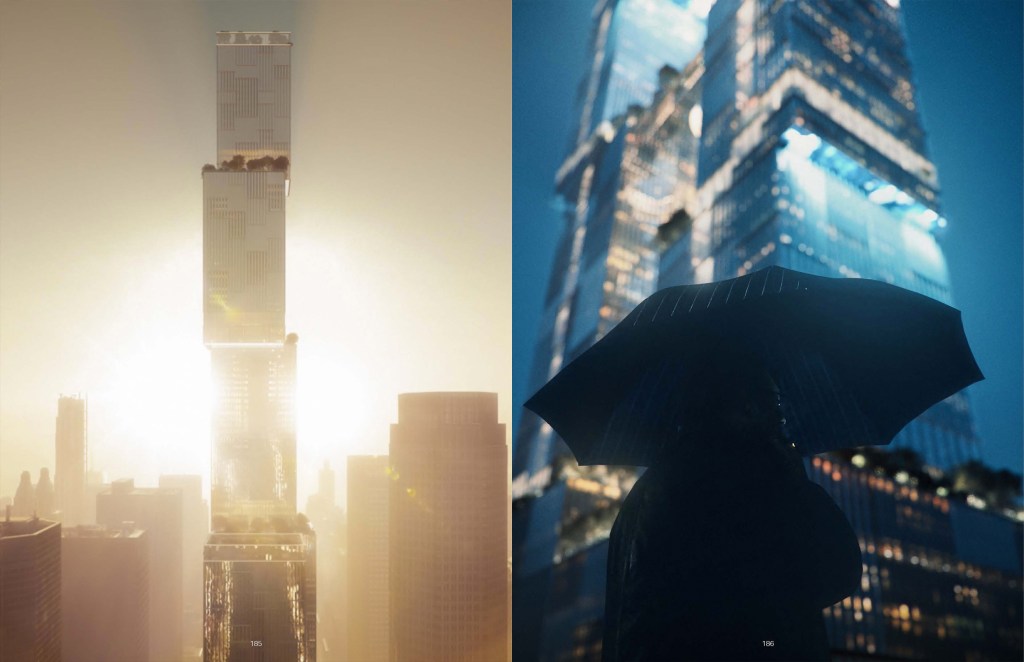
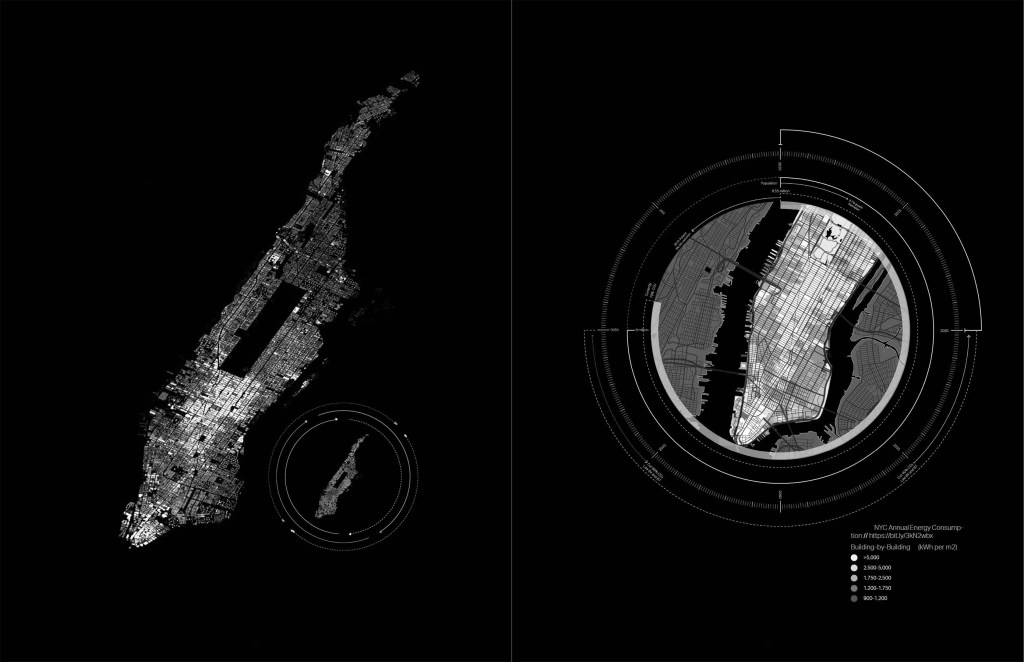
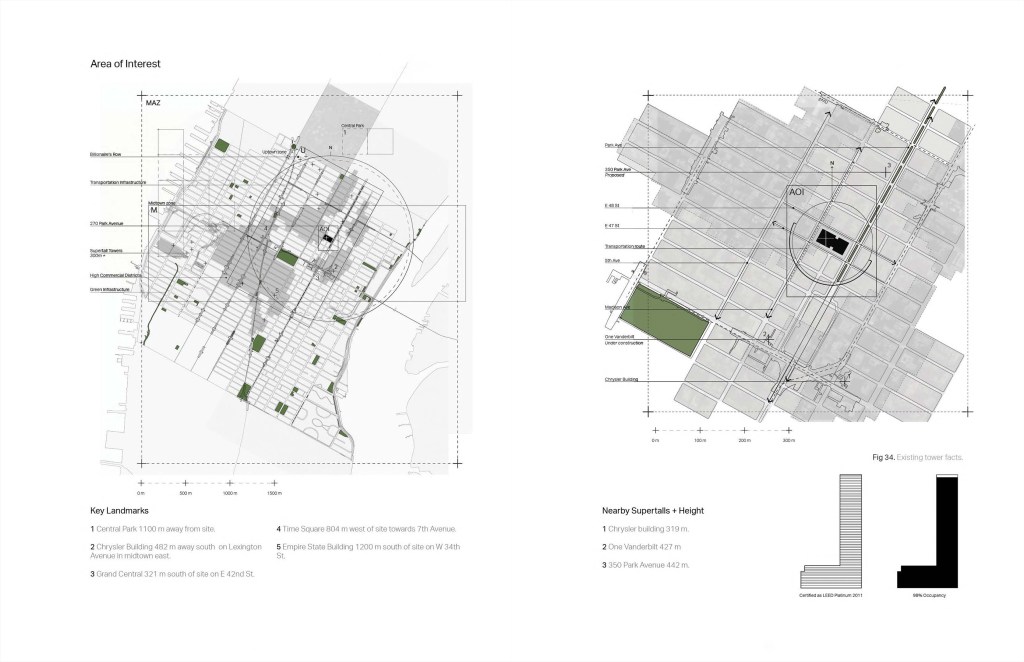
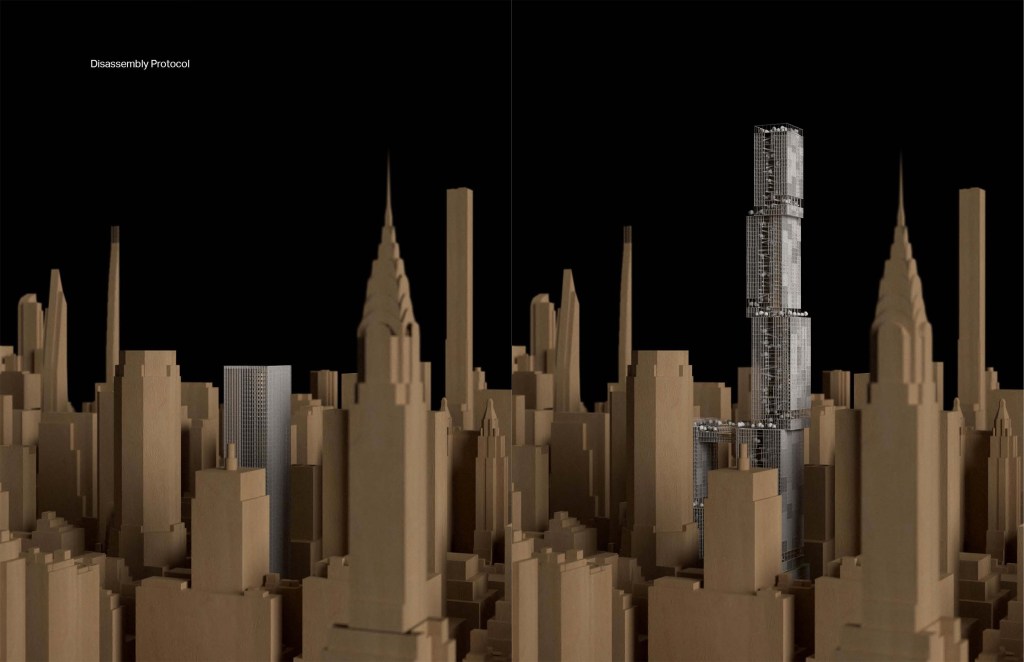
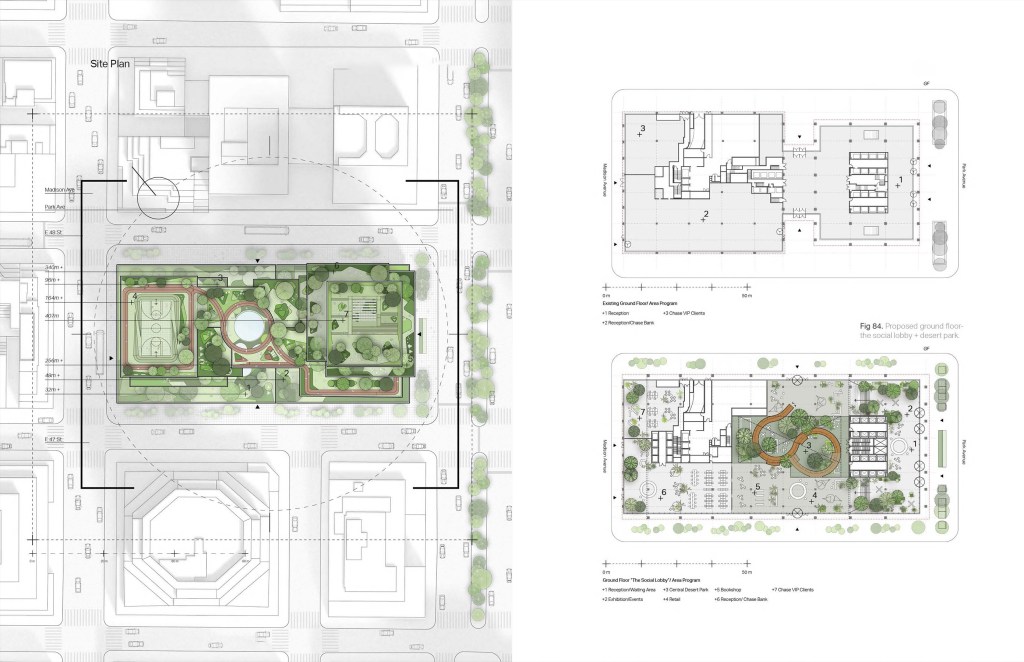
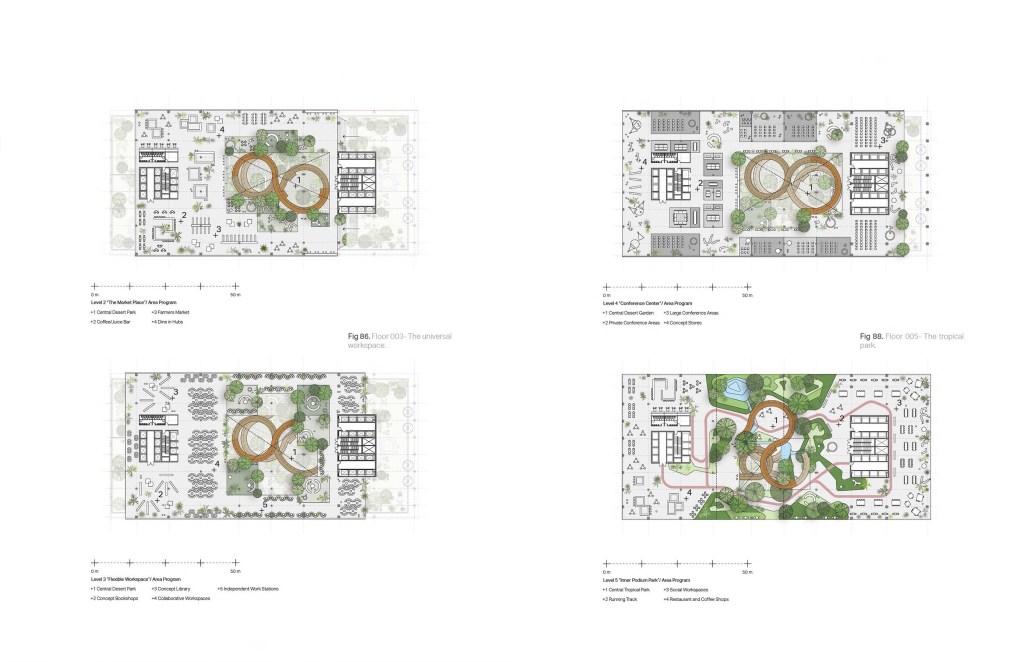
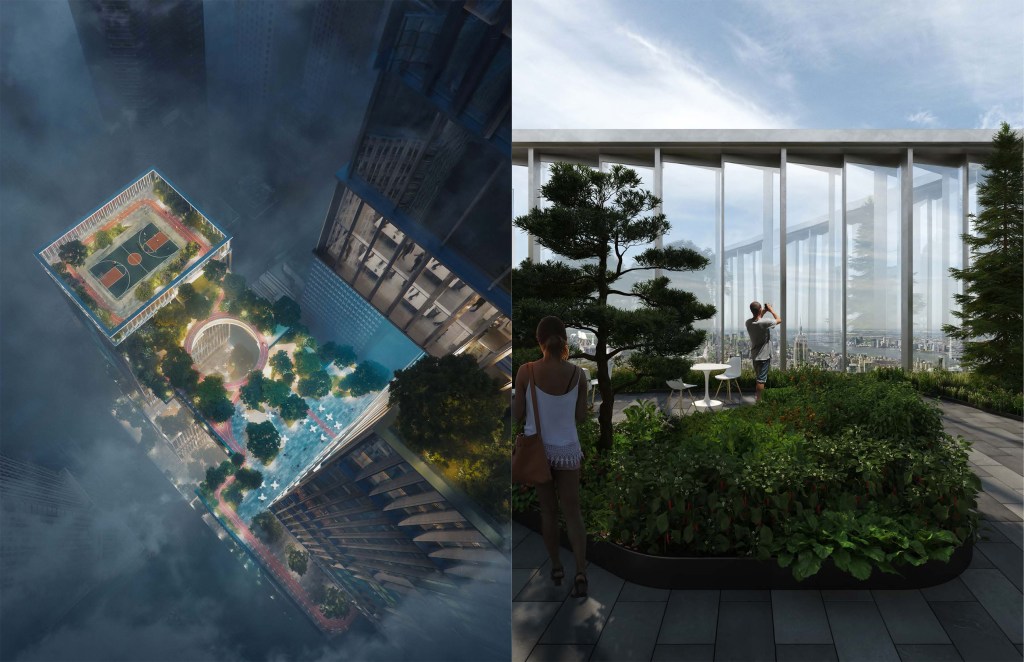
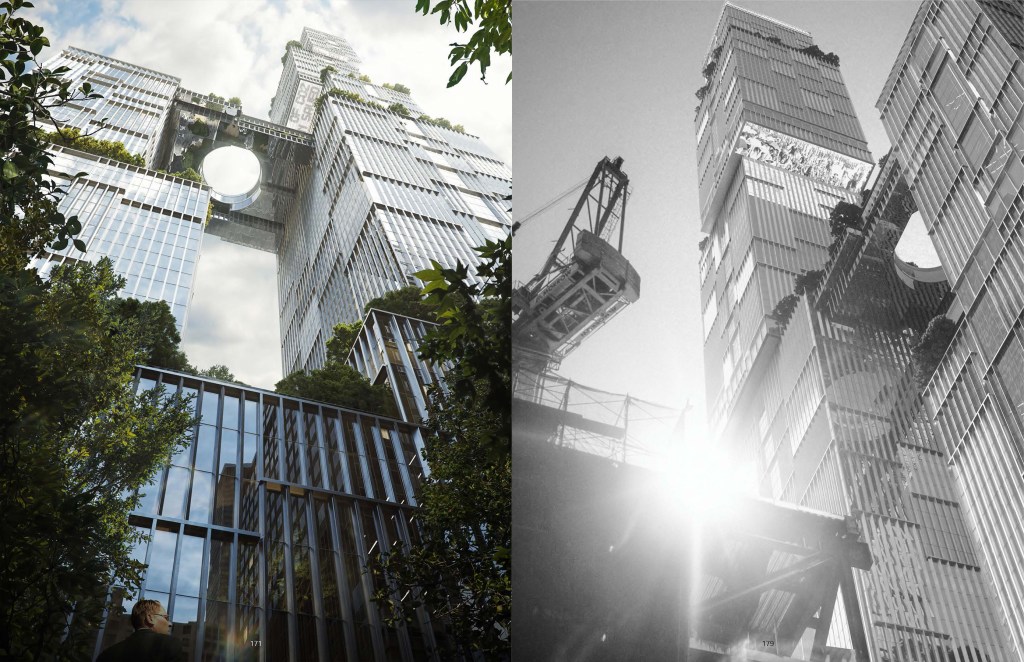
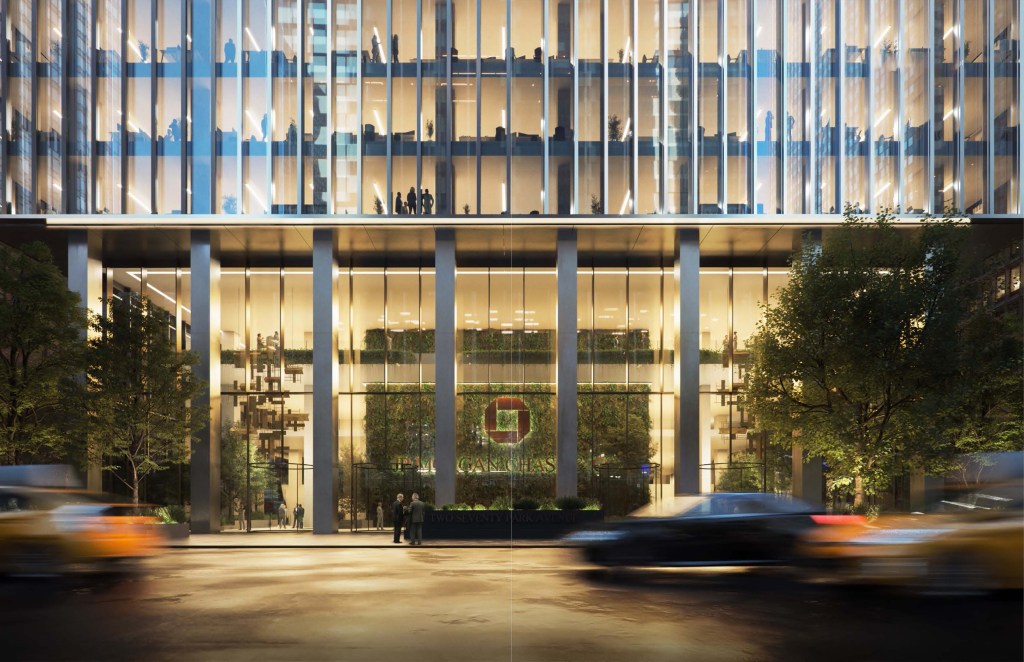
This thesis explores the design of a supertall tower in New York City (through an adaptive transformation of an existing building), by employing circular design principles and design-for-disassembly strategies. The research posits that circular design, in an age of resource scarcity and depletion, affords a more sustainable, integrated and wholistic approach to considering architectural practice. The research includes research into circular design, and builds on work experience at 3XN/GXN, to help situate circular design and its emphasis on Materials, Service Life, Standards, Connections and Deconstruction, as a method of thinking through architectural design and construction. This structure is used as a design lens for a transformation of the (slated to be torn-down and replaced) JP Morgan-Chase building on Park Avenue. The design project explores ideas of green infrastructure, carbon neutrality, flexibility and adaptability and more fully integrated social and public spaces into a supertall tower.


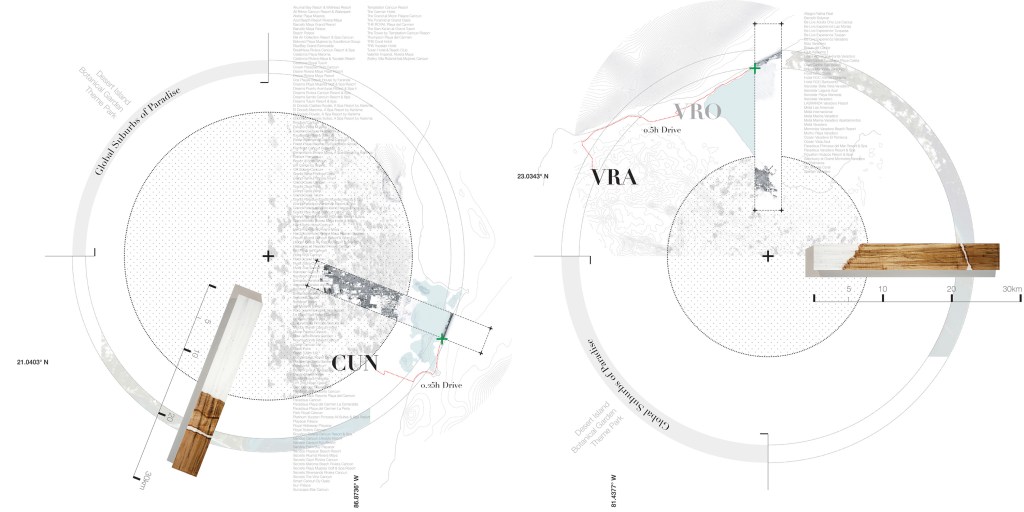
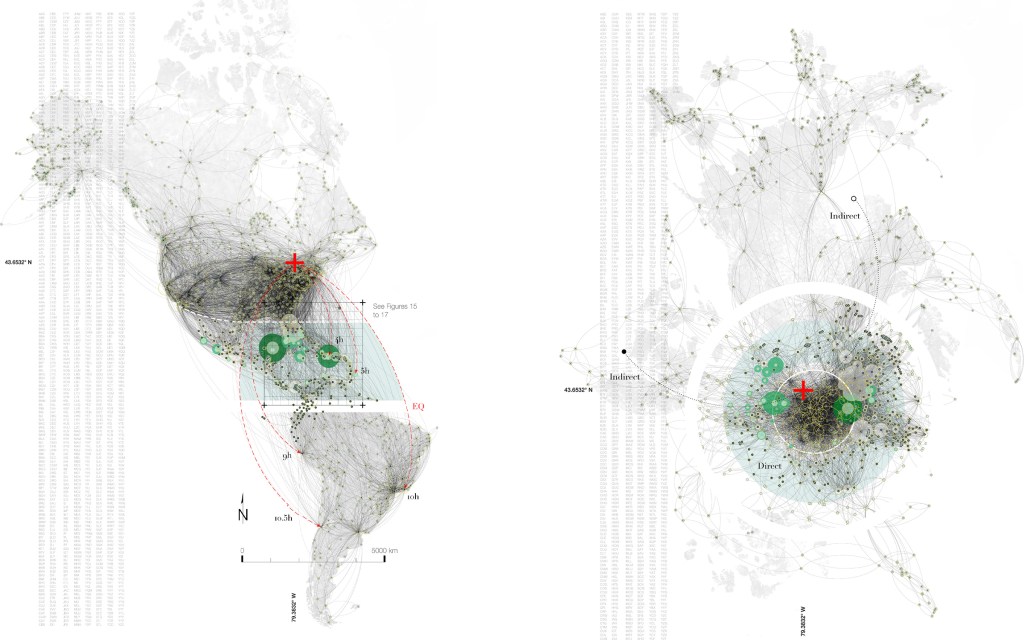
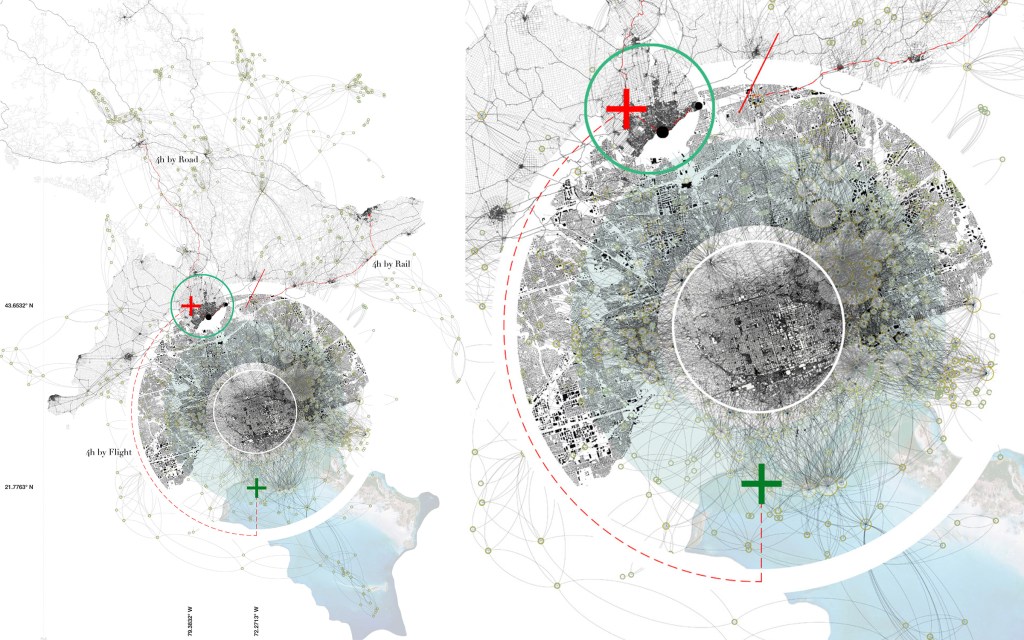
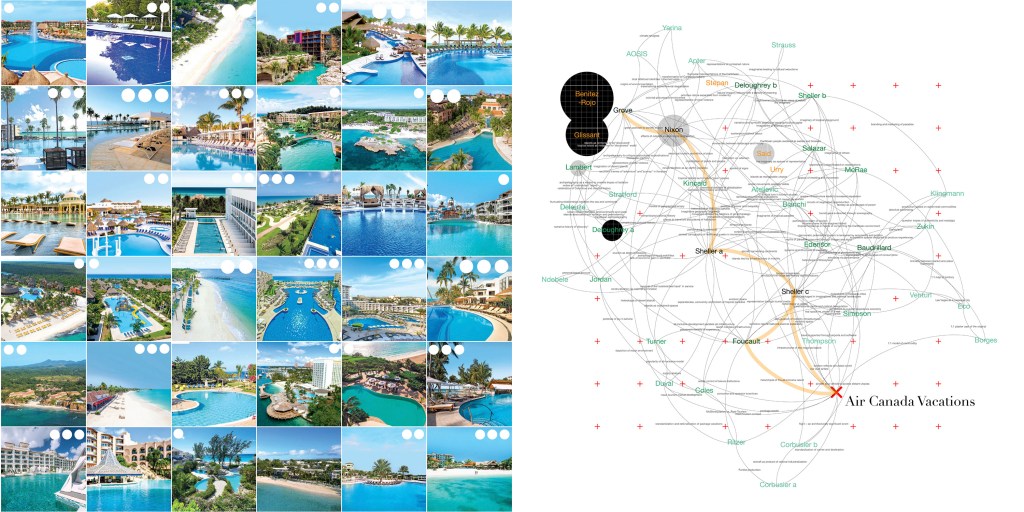
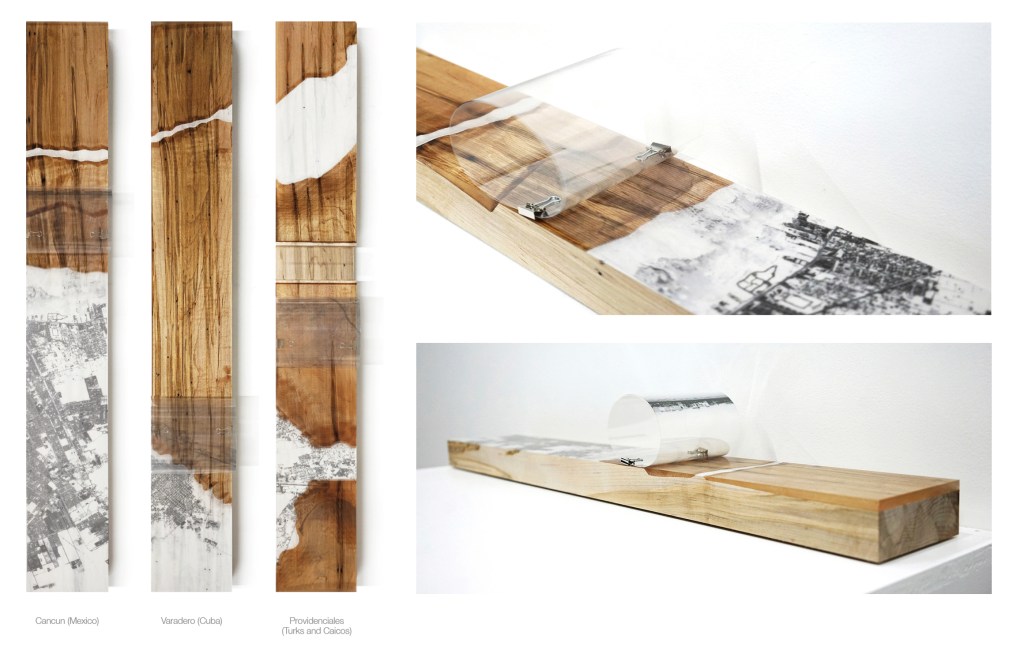
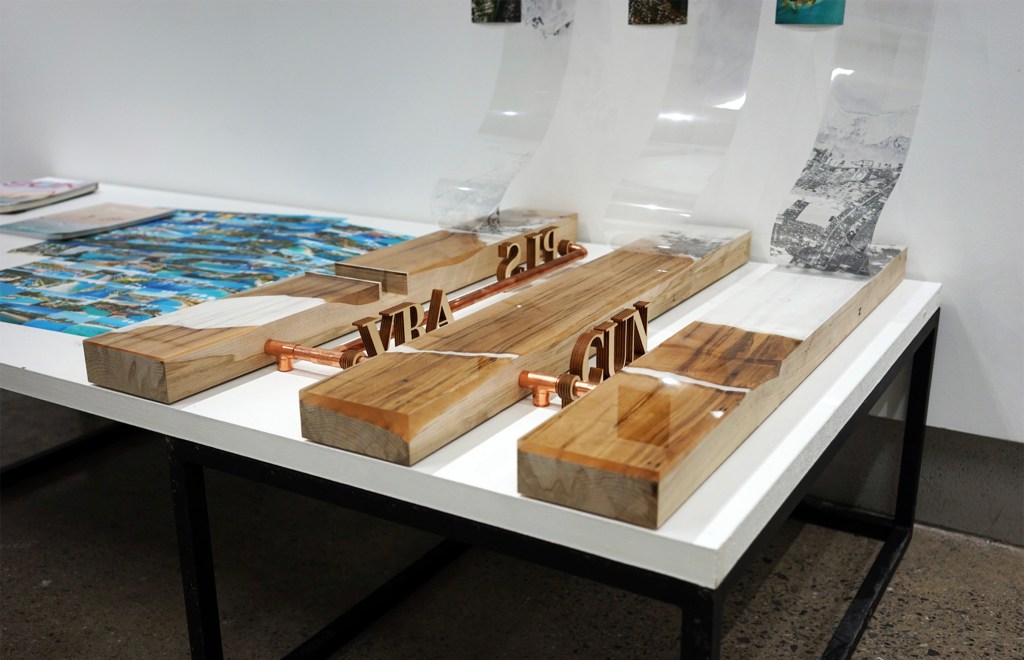
2019: Kristen Smith // All Inclusive Architecture: Budget Airlines and the Global Sprawl of Paradise
The conceivable boundaries of ‘home’ expand with the scale and accessibility of adjacent transportation networks. Subsequently, the threshold between ‘home’ and ‘away’ is understood through varying scales of movement. Air travel is assumed to always carry tourists ‘away,’ by virtue of its speed, spectacle, and indifference to geography. This thesis engages Canada’s budget airline industry and its role in cultivating intense consumer experiences at all-inclusive resorts throughout the greater Caribbean. Paradoxically, these experiences depend on vivid representations of tropical paradise that are both distant and exotic, yet familiar. Facilitated by expedient air travel and controlled airport transfers, passengers are brought into closer contact with domestic myths of paradise more than any genuine interaction with an unfamiliar place. This thesis in turn positions touristic enclaves as displaced, yet well-connected extensions of North America’s sub-urban network. By relfecting on all-inclusive resorts not as idealized destinations, but as a continuation of standardized development, reductive imaginaries of paradise will be examined against common tropes of suburban banality.

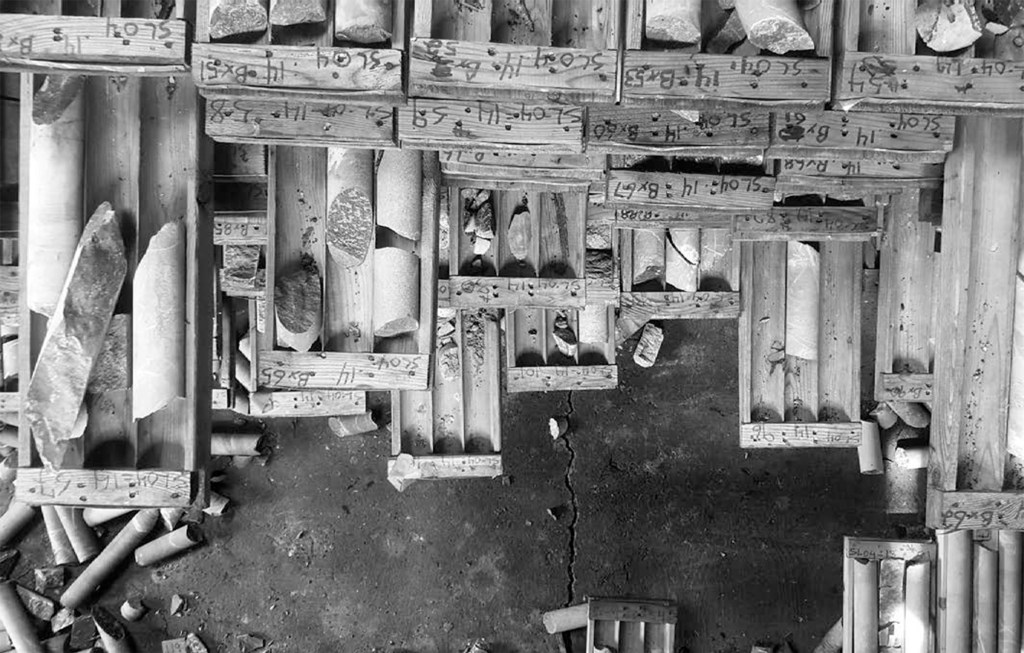
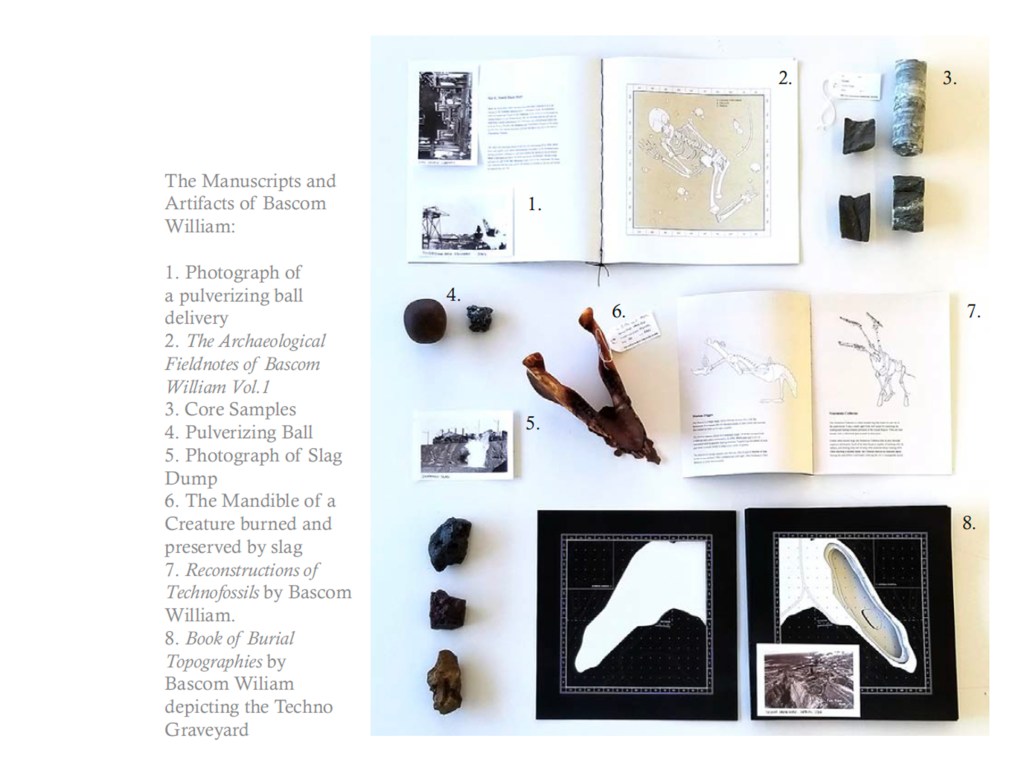
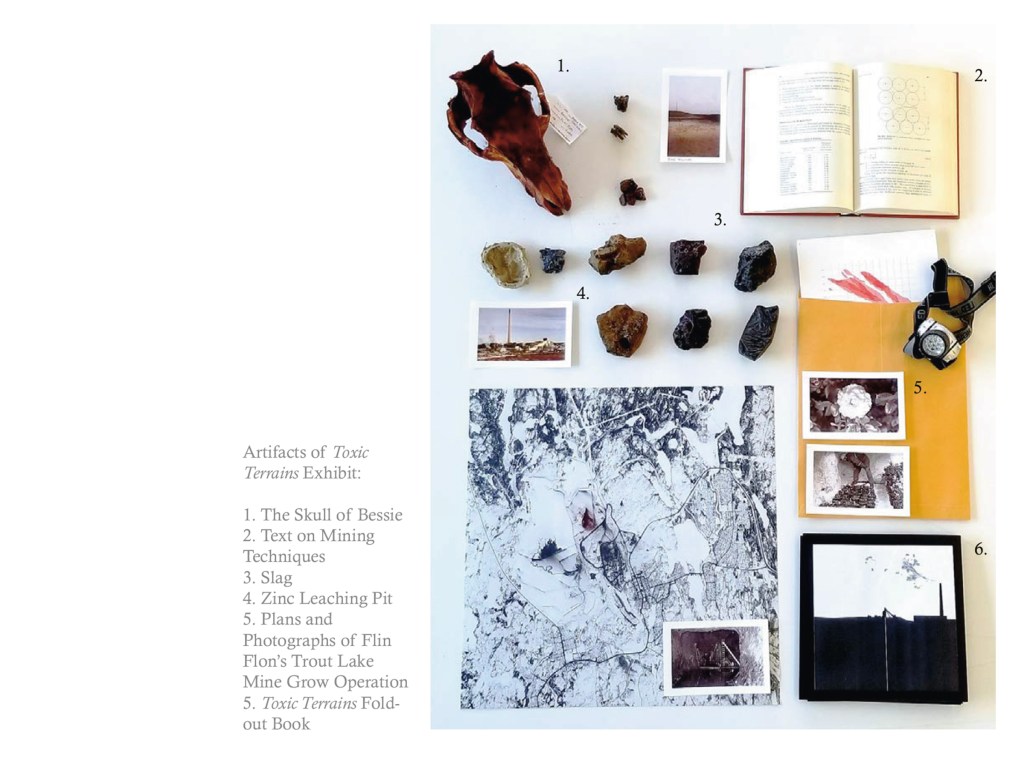
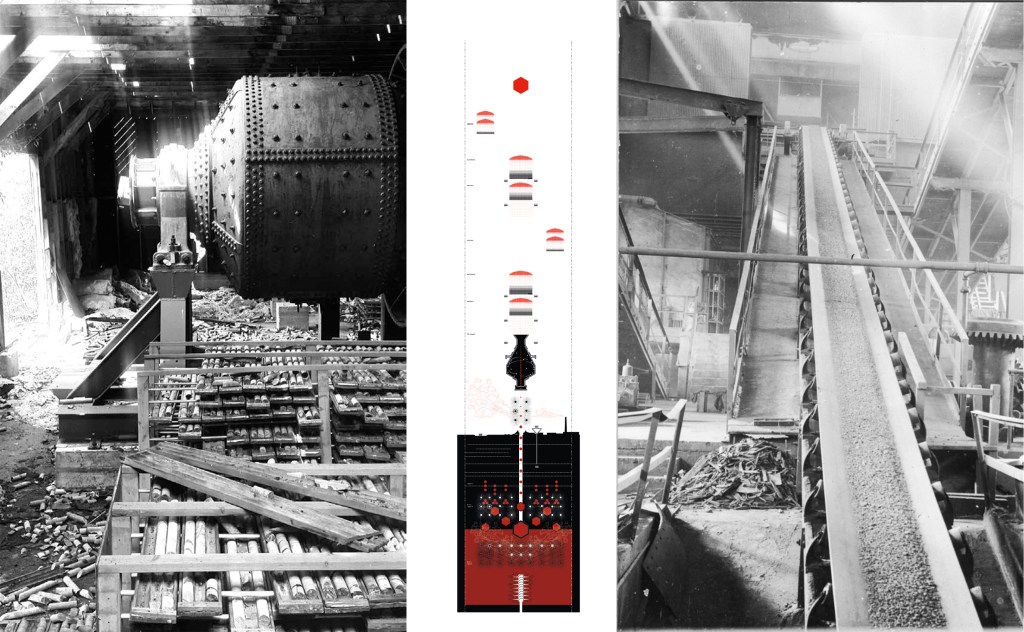
2019: Stacey Kowalchuk // Toxic Landscapes and Technofossils: A Speculative Anthology of Flin-Flon, Manitoba
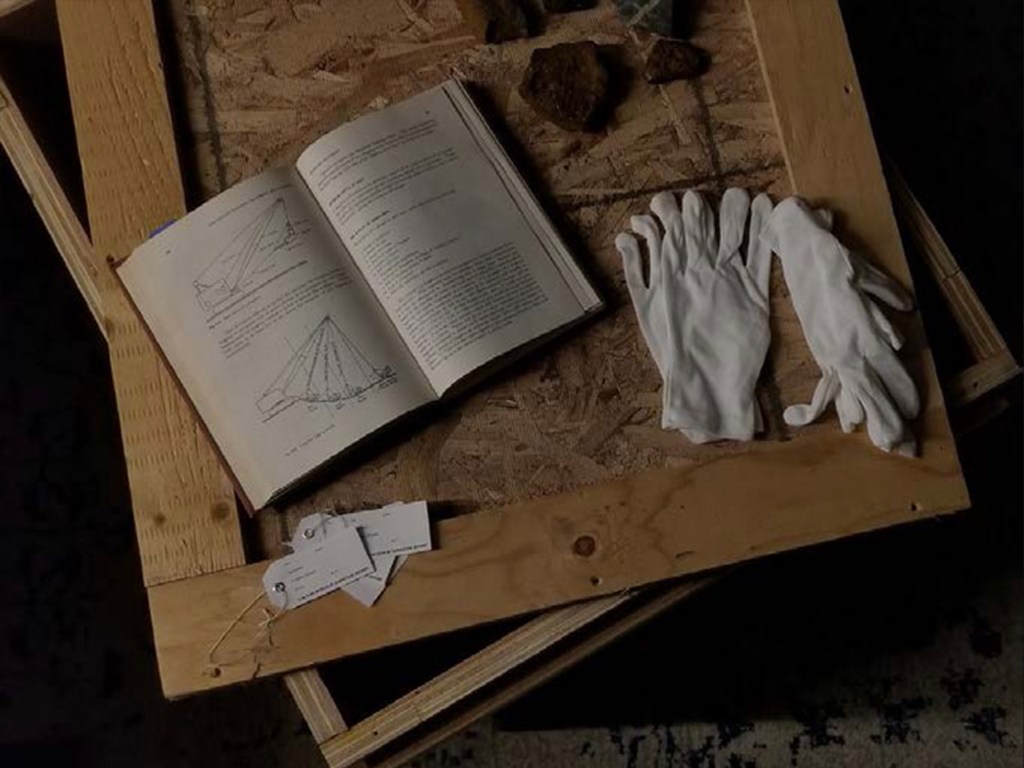
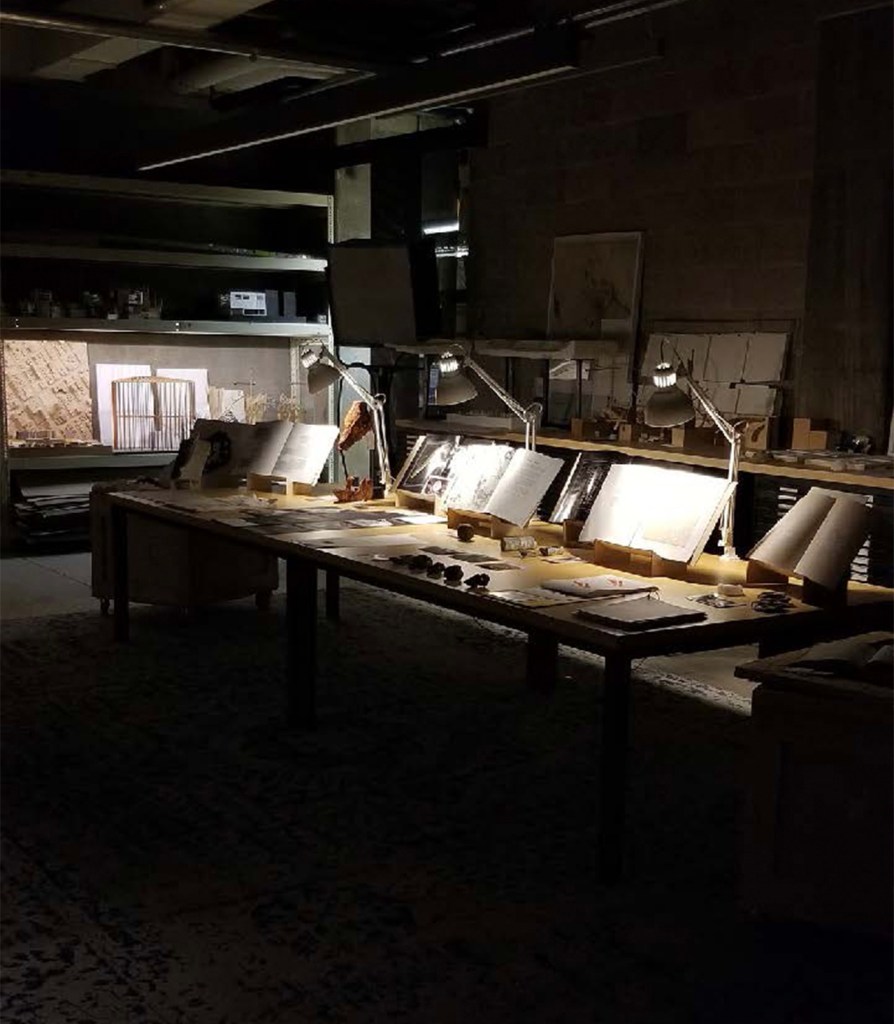
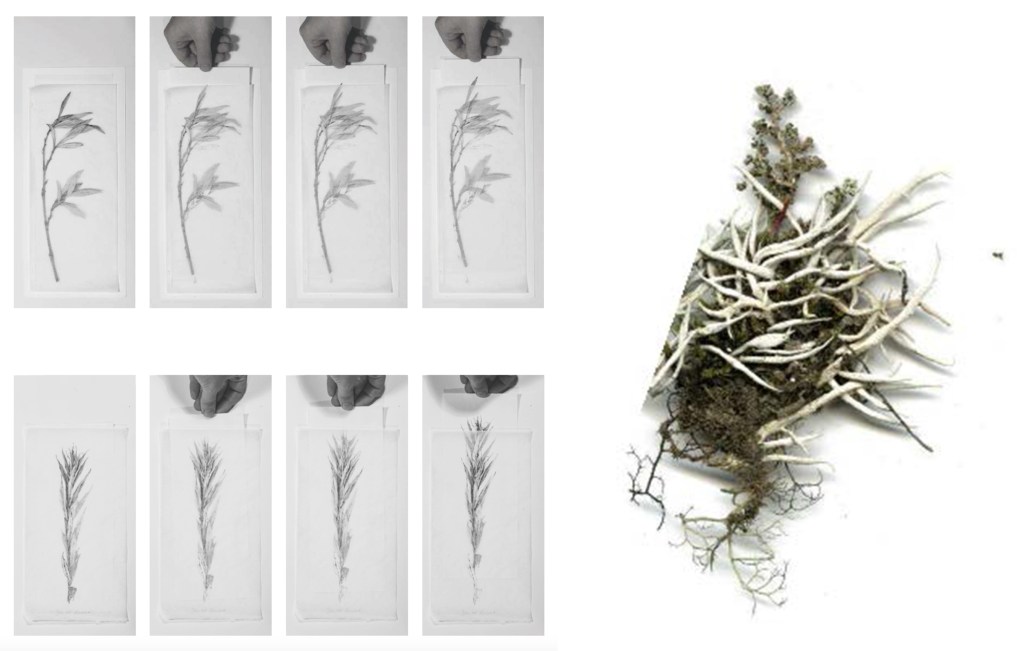
This thesis explores the mirrored worlds created by the mining industry in Flin Flon, Manitoba. Named after an explorer from the novel, The Sunless City, Flin Flon is a terrain born from the curious intersection of geological possibility, mining, and science fiction. The town is negotiating its exploitation of mineral wealth while simultaneously coming to terms with its own environmental and economic exhaustion. This project explores and investigates the absurd and unintended consequences of extraction through a series of constructed narratives inspired by the novel’s protagonist, Flintabbatey Flonatin. These narratives are used to catalogue a multitude of transformative events in the creation of new natures and new futures. Comparing fictions to core samples and technofossils, the relationship between Flin Flon and its spectral underworld are revealed as two conflicting worlds that continuously bleed and leach into one another.


2019: Stephanie Dawn Murray // Going North: A Reflection on Lines on the First Canadian Road to the Arctic Coast
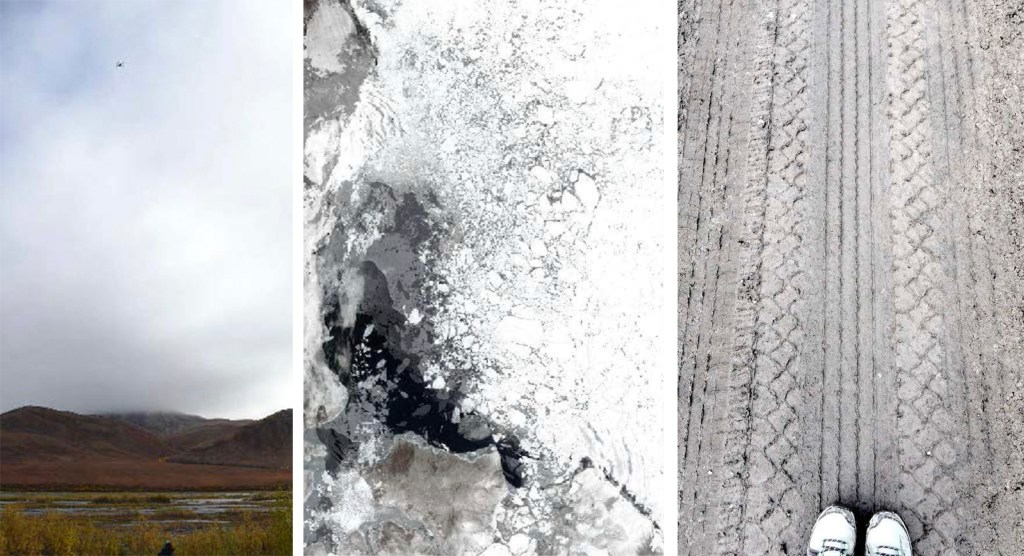
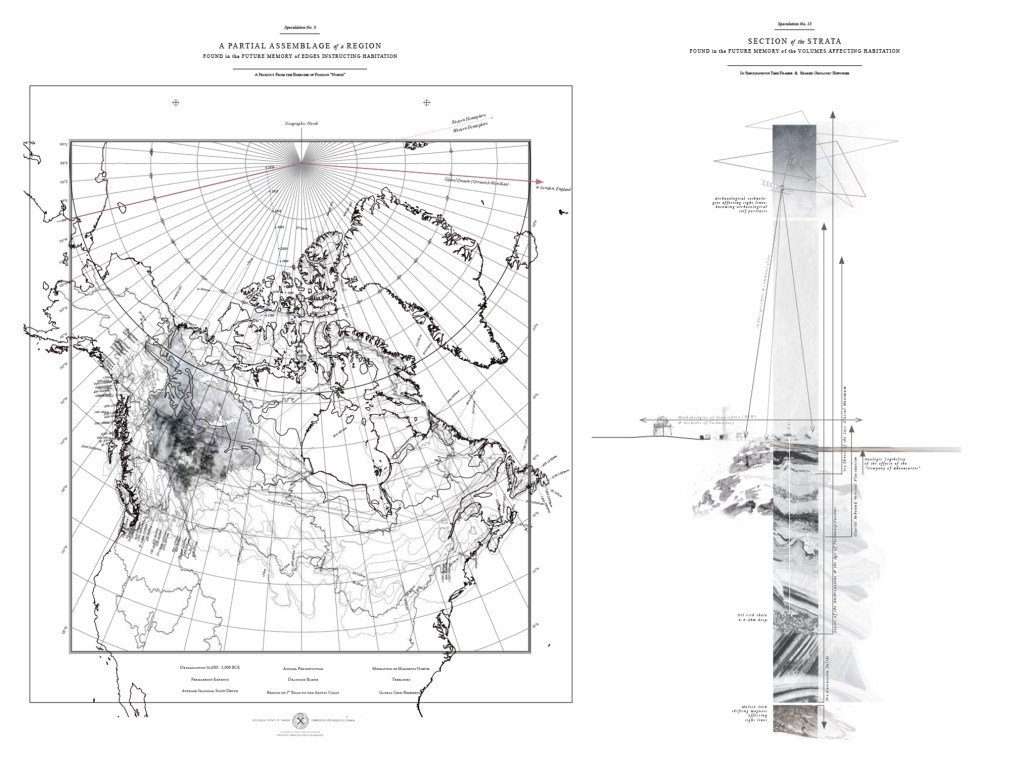
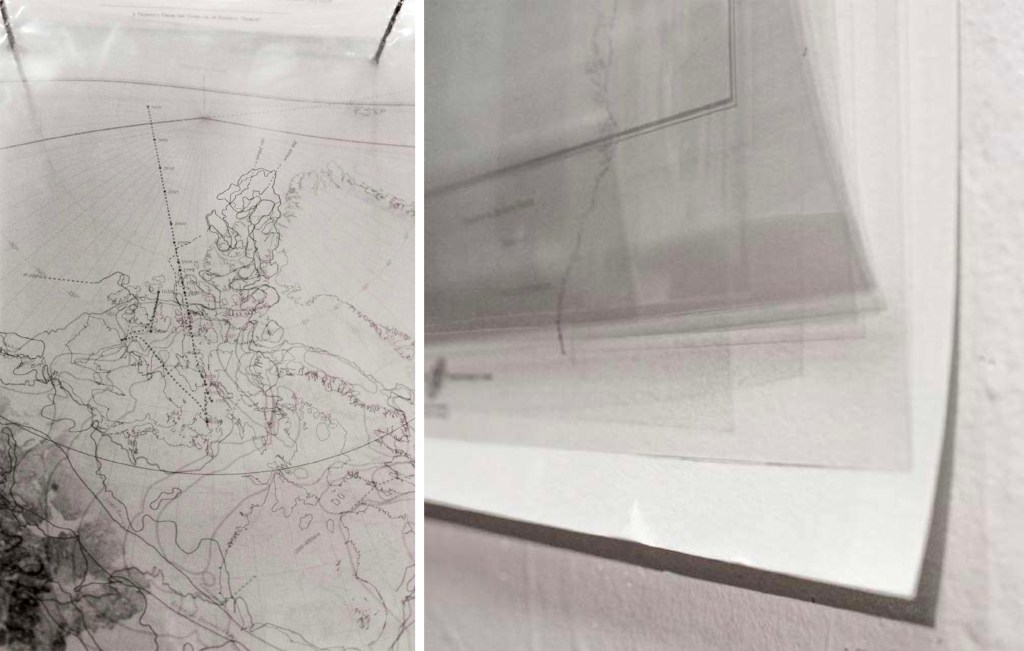
The experience of the first Canadian Road to the Arctic Coast informed the trajectory of this thesis which investigates “the line” as a tool that explores and describes spatial understandings. These understandings operate in various works – as a physical artifact in space (the road), in making (maps, notations, models and drawings), in storylines (with their material consequences) or physical perspectives (as lines of sight). All of these inform thinking and acting in and toward the site of this study. A line doesn’t necessarily manifest as “the dot that went for a walk”, but often as an inclination, a thought pattern, a habit of spatial engagement, an assumption, or a physical act. The lines we draw and imagine order our spatial and social practices and write the stories of our understandings. Through a series of reflective exercises, this thesis looks for ways in which we might begin destabilizing our patterns of seeing, thinking and making.


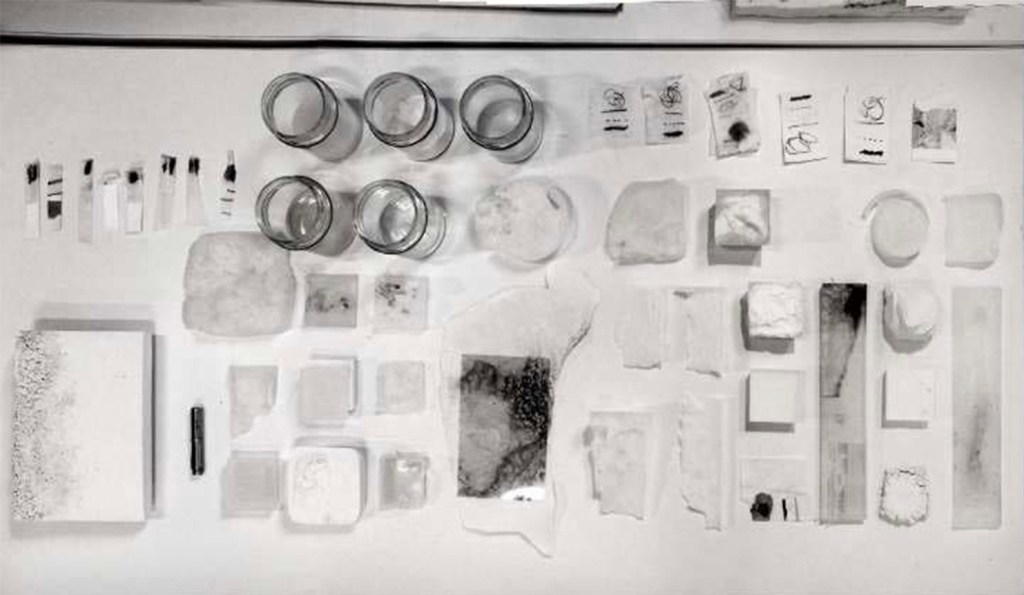
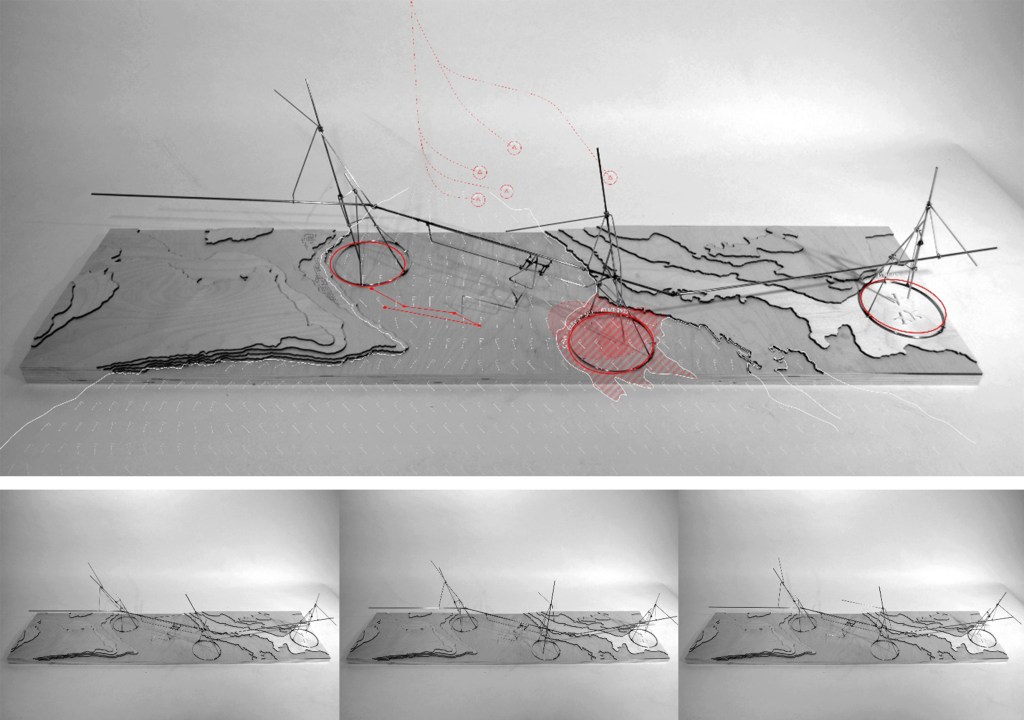
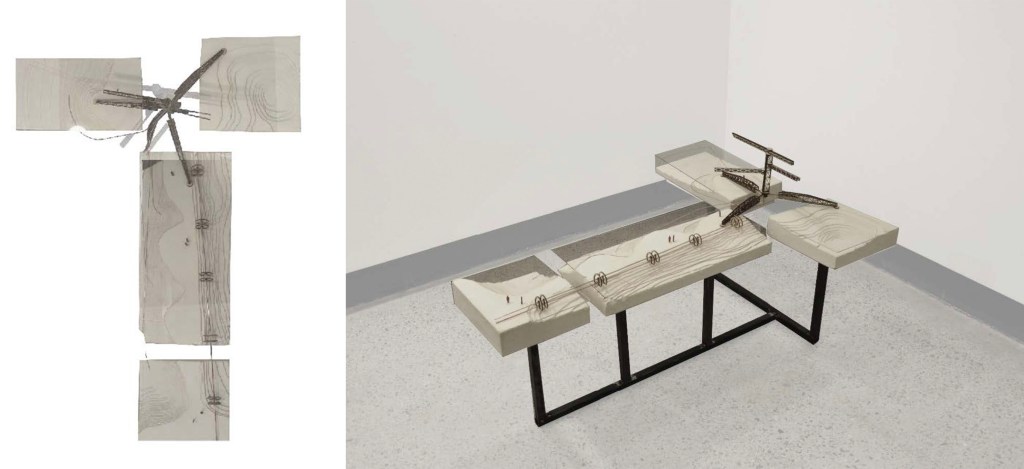
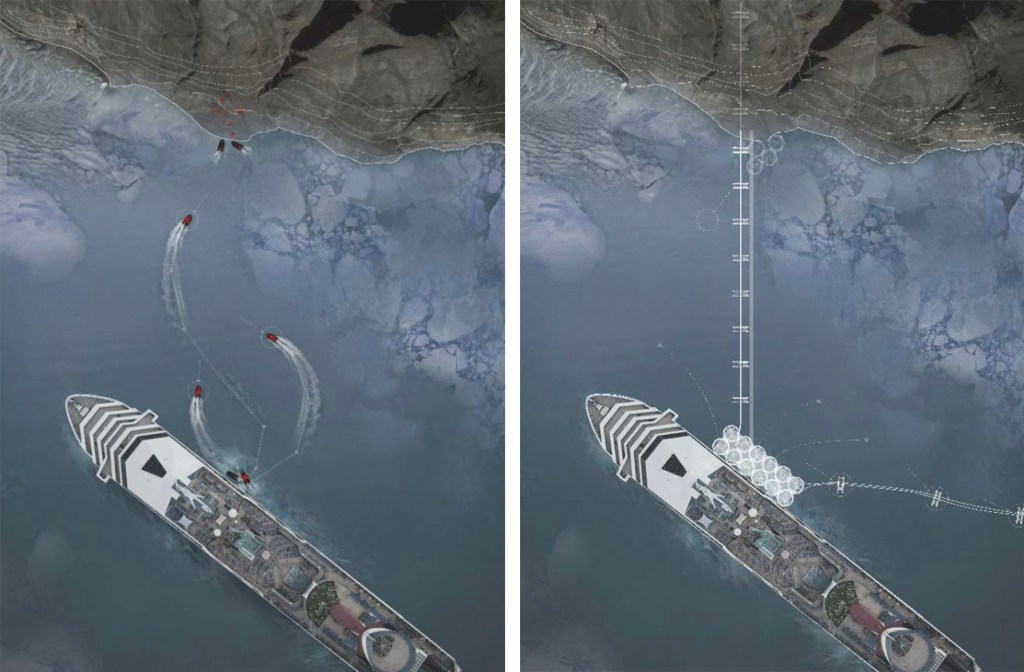
2018: Troy Whelan // Landscape and Seascape Instruments: Arctic Bay at The Intersection of Ecology, Economy and Infrastructure
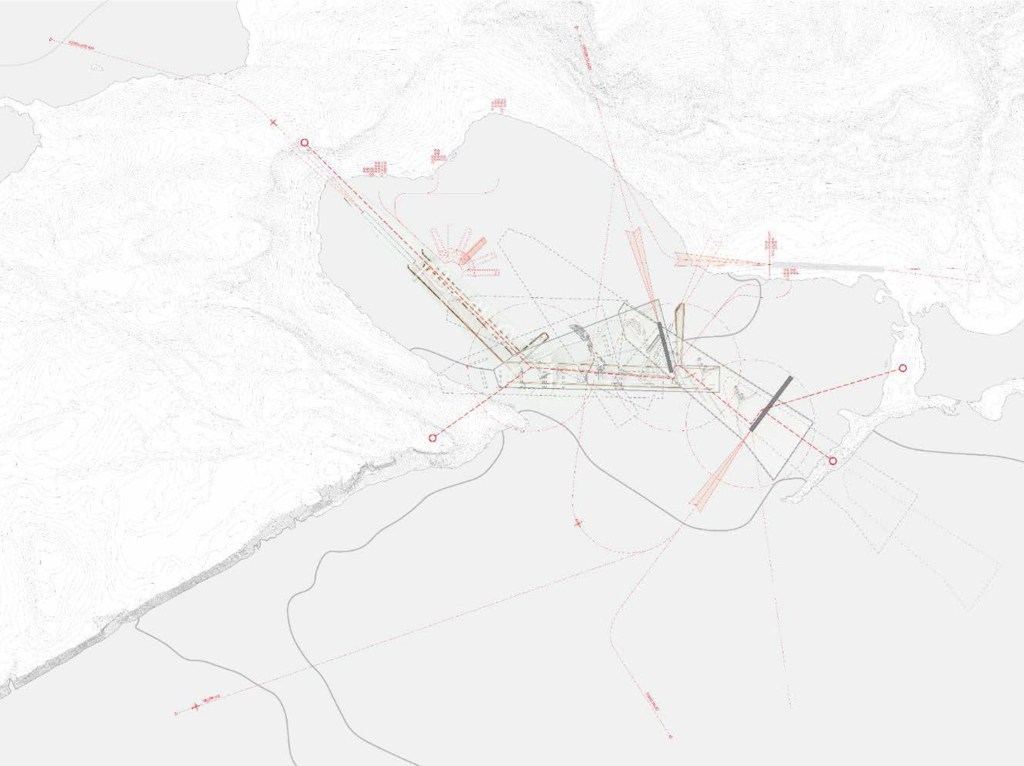
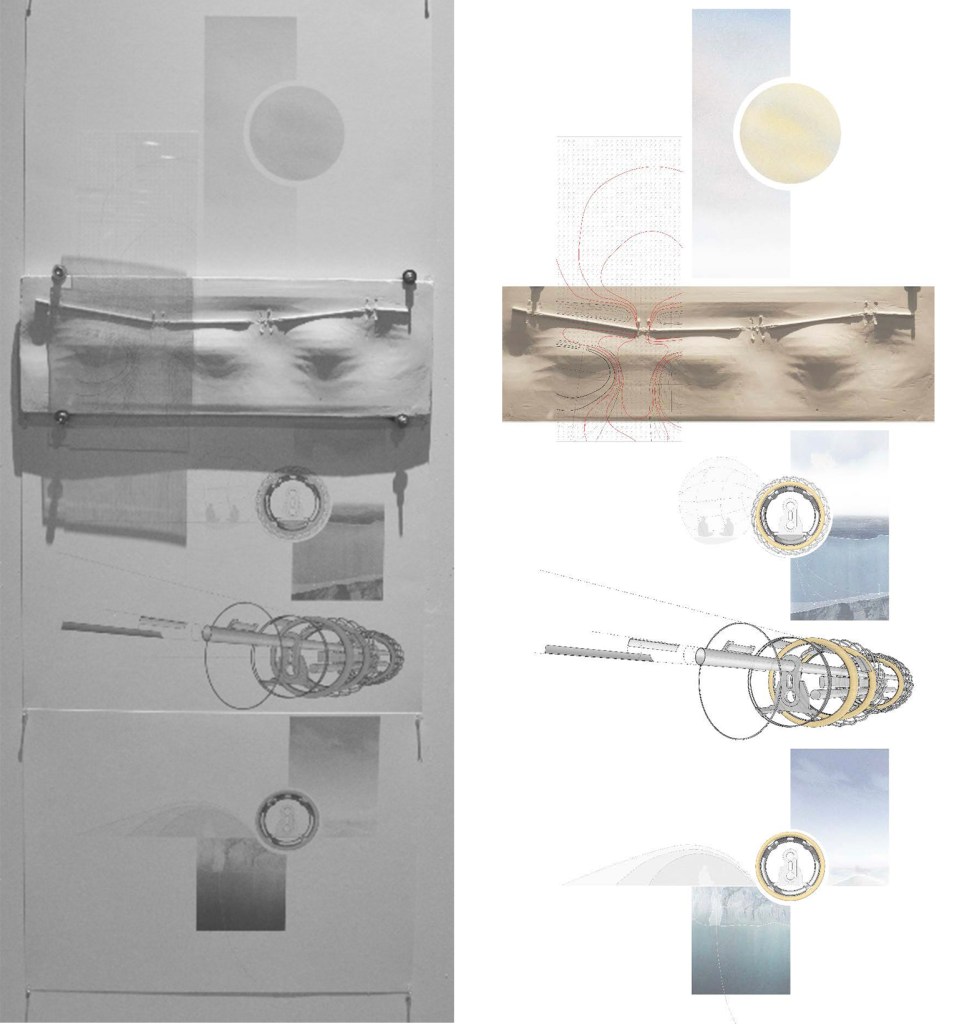
The small hamlet of Arctic Bay, located along the north shore of Baffin Island in Canada’s Arctic Archipelago, is the site of rapid economic and environmental change, as well as significant infrastructure development. Close proximity to an idled zinc, silver and lead mine, as well as an increasingly ice-free Northwest Passage has placed this community at the forefront of regional change such as eco-tourism, as well as geopolitical questions regarding Canada’s Arctic sovereignty. Implicated always are the communities and people who live and work in Canada’s North – communities and people who are often displaced into the background of these important discussions. Landscape + Seascape Instruments seeks to investigate the spatial implications of landscape and seascape infrastructure through the development of a universal infrastructural instrument; an architectural device that addresses connectivity and the interstitial space between communities at both the regional and the human scale, to better understand and foster a dialogue about Canada’s role in an increasingly accessible arctic region.



2018: Marie Lefebvre // The Illuminated City: An Atlas of Islamic Space in Montreal
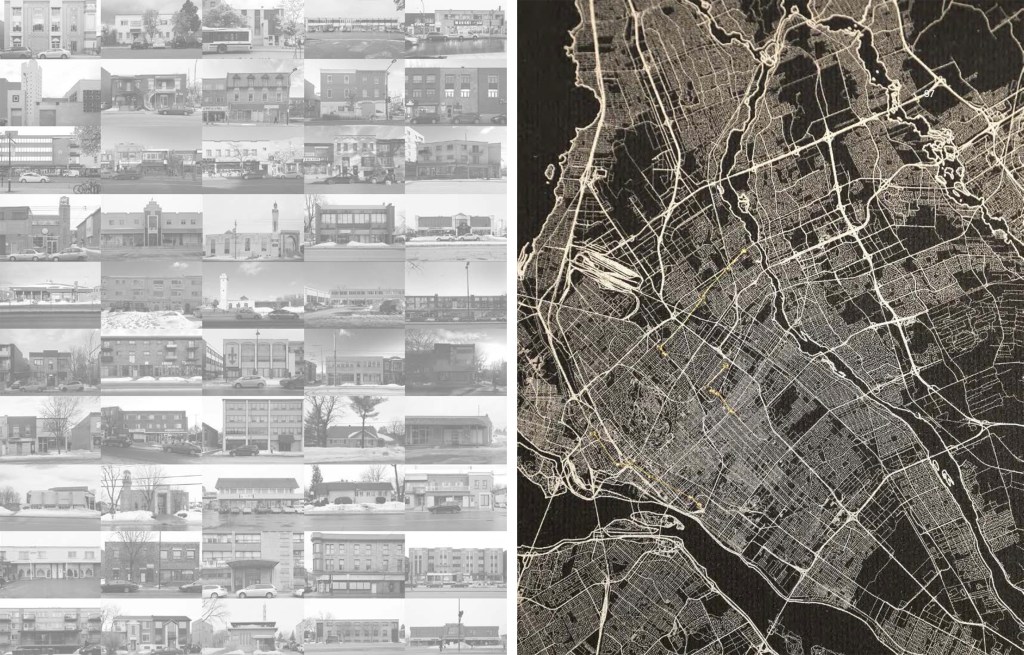
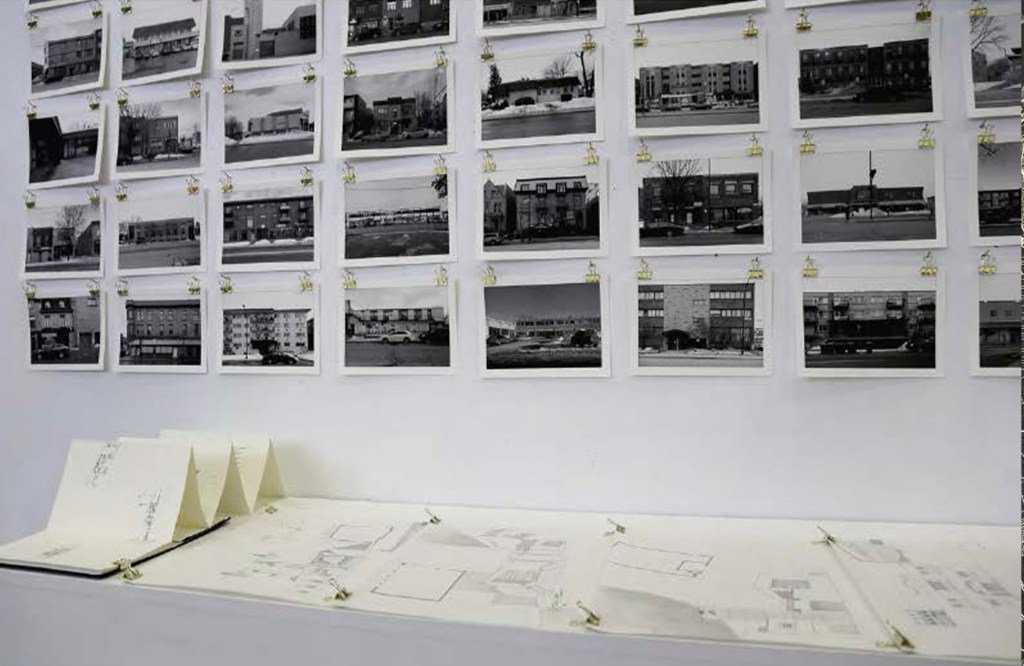
Many everyday Islamic spaces in the “West” are almost undetectable. In Montreal, zoning regulations, economic restrictions, and the recurring debate surrounding religious accommodations significantly impact how and where Muslim communities establish their places of worship. These buildings are present, yet often hidden in the physical urban fabric – which is deemed “secular” – that surrounds us. This thesis explores questions of visibility / invisibility, and secular / sacred space: what is it that we call the secular public space? How does it compare to religious space, and how permeable is it to the non-secular? Where does the sacredness of a place rest? How do the different places of worship in a city connect together? This research investigates this theological landscape as a vernacular that is repurposed into a religious space and place of a community, and studies ways to make these religious spaces visible, to reveal another landscape within Montreal.


 Ozayr Saloojee